DIY mini split heat pump rebates in 2026 got harder to find once the federal tax credit for heat pumps expired. Contractor quotes still hover in the thousands. And you're standing in your garage, bonus room, or half-finished addition wondering whether installing a mini split heat pump yourself in 2026 can still save money - and whether any rebates survive for DIY projects.
This guide is here to show you exactly what changed, what incentives are still around, and how to set up a Zone Air DIY mini split so you can get every dollar you're still entitled to.
Fast Answer: Can DIY Mini Split Heat Pumps Still Get Rebates in 2026?
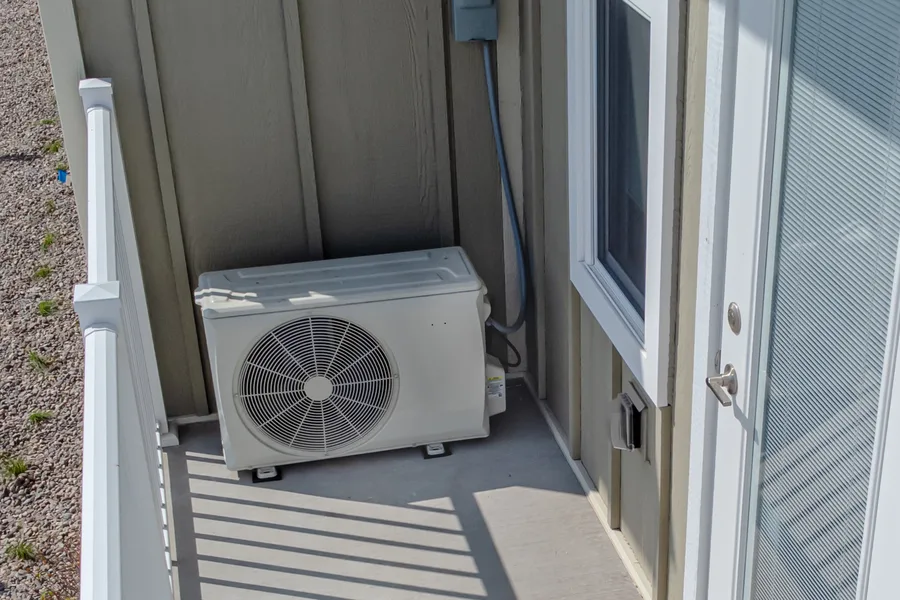

Yes, but the rules changed. DIY mini split heat pumps generally do not qualify for most rebates in 2026. The classic federal tax credit under Section 25C is no longer available for systems installed after December 31, 2025. It used to have up to $2,000 for each heat pump that qualified. That door closed with the passage of the One Big Beautiful Bill, and there's no replacement federal credit that currently covers 2026 installations.
However, the picture isn't all or nothing. Most heat pump rebates in 2026 are run at the state and utility level, and their rules vary a lot by area. The majority of these programs do need a licensed contractor, but a few clearly allow homeowner self-install for specific air source heat pumps and ductless mini splits - especially equipment-only rebates that don't cover installation labor.
When you go DIY, you usually lose the rebates that cover labor, but you don't lose every incentive. Zone Air DIY mini split systems can still help homeowners get equipment-only rebates, sales tax breaks and property tax perks that do not need contractor labor. Here's what a few of the bigger programs pay for 2026:
- Massachusetts (Mass Save) pays $250 to $2,650 per ton depending on the tier, capped at $2,500 to $8,500 per home, with up to $16,000 for income-eligible households. A Mass Save Heat Pump Installer Network contractor has to do the install
- New York's Clean Heat program pays a flat amount set by your utility. National Grid's 2026 sheet lists $6,000 to $12,000 for a full-load air source heat pump in a single-family home, and a participating contractor has to submit the project
- Rhode Island Energy pays up to $625 per ton, and that standard rebate does not require a contractor (details below)
Rebate rules vary by ZIP code and program rules. Some rebate programs completely leave out DIY installations, while others accept qualifying equipment no matter who installs it. It's a good idea to always check your specific rebate program before buying.
How DIY Mini Split Heat Pumps Work in 2026
Mini splits are ductless air source heat pumps that can provide both heating and cooling to individual rooms or zones. They have one outdoor unit connected to one or more indoor air handlers. They can deliver climate control without the energy losses that come with existing ductwork. Modern mini splits have inverter technology to help with efficiency. They adjust the speed of the compressor continuously instead of cycling on and off.
Why this matters for your wallet:
- Inverter-driven heat pumps are able to move heat instead of creating it, and ENERGY STAR says certified mini splits use up to 60% less energy than electric resistance heating like baseboards or space heaters
- Mini splits skip ductwork, and in a typical house 20 to 30 percent of the air moving through ducts is lost to leaks, holes and poor connections
- Zoned control means you are able to heat or cool only the rooms you are actually using
- DIY-ready systems like Zone Air use pre-charged line sets and quick-connect fittings, so heat pump installation is something you can do yourself if you are a competent homeowner
- Modern units reach SEER2 ratings in the mid-20s with high HSPF2 values. Many 2026 rebate programs check what efficiency ratings a unit has and whether it is on the cold-climate list
Even with the federal credit gone, 2026 is still a good time to switch to heat pumps. State and utility incentive programs are still paying out in a lot of areas. If you go the DIY route, you can cut out the installation labor that makes up about a third of a typical contractor's installed cost.
2026 Federal Landscape: What Happened to the Heat Pump Federal Tax Credit?
Here's the timeline. Through 2025, the Energy Efficient Home Improvement Credit (Section 25C) let homeowners claim 30% of the cost of qualifying heat pumps, up to $2,000 per year, on their tax return using IRS Form 5695. The federal 25C tax credit offered up to $2,000 for systems that met Energy Star or CEE efficiency minimums.
On December 31, 2025, the federal Energy Efficient Home Improvement Credit came to an end. Federal Tax Credits under Section 25C for heat pumps are no longer something you can get for 2026 installations. The Residential Clean Energy Credit (25D) also ended for spending after that date. As of now, no active federal credit under these sections can be claimed for newly installed heat pumps in 2026.
Key points for you:
- Even when the federal credit was active, it did not ban DIY installation. What was required was that the equipment qualified and met efficiency and product standards
- Many state and utility programs that were layered on top did need contractors. That created some confusion about what "eligible" was supposed to mean
- Federal benefits were always "back-end," which means you claimed them on your tax return, while state and utility rebates often showed up as instant discounts or checks
- Homeowners planning a DIY heat pump installation in 2026 should consult a tax professional before counting on any federal credit, and keep detailed receipts and model numbers in case a new or modified credit comes up
- Bookmark the IRS home energy tax credits page and the DOE Home Energy Rebates page so you can check for any developments
Where DIY Heat Pump Installs Still Qualify for State and Utility Rebates in 2026
In 2026, most cash-back incentives for heat pumps are state- or utility-administered, and rules for DIY installation vary a lot by area. Local utility programs may vary a lot in what they require for rebates and installations, so what works in one ZIP code may be completely off the table next door.
Here are some examples of how different programs handle DIY:
- Rhode Island Energy: Mini split heat pump rebates are available for up to $625 per ton. For the standard rebate, their rules say working with a participating contractor is not required, so it may survive a DIY install (the enhanced rebate for homes on electric baseboard does need a participating contractor). Systems must now use A2L refrigerants, and R-410A units are no longer eligible. Zone Air units run on R-454B, which is an A2L refrigerant.
- South Dakota (Sioux Falls): The "Power Forward" program from Heartland Energy and the City of Sioux Falls pays $500 for a mini split of 1 ton or larger for Sioux Falls electric customers. The 2026 form asks for the installing contractor's name and doesn't say anything either way about self-installs, so confirm with the utility before you buy.
- Oregon's HP3 Program needs an approved contractor to do the installation, so pure DIY installs don't qualify for this rebate. Funding for existing owner-occupied homes is also fully reserved.
- Efficiency Maine: Rebates are $1,000 to $3,000 per outdoor unit, with lifetime caps of $9,000 for low-income households, $6,000 for moderate-income and $3,000 for everyone else, but the installation has to be performed by an Efficiency Maine Residential Registered Vendor. That leaves out DIY.
State-level Home Electrification and Appliance Rebates (HEAR) need a contractor from the state's qualified list to install a heat pump. That is a DOE program requirement, so these rebates won't accept self-installed systems. However, separate programs like breaks on sales tax and incentives on property tax may still apply to the DIY projects you do.
Key factors rebate people look at: the type of system you have (air source heat pump vs. electric resistance replacement), whether it heats and cools, whether you're replacing fossil fuels, the exact match of your indoor and outdoor models, and the size of your system.
When Self-Install Mini Splits Are Eligible
This is where the fine print matters most. Many programs are going to need installation by a licensed contractor, and self-installations usually lose access to utility rebates that need professional sign-off. Many local and state rebate programs need a pro to do the install to qualify. But the landscape isn't all the same.
Common rule patterns in 2026:
- "Licensed/registered/participating contractor required" - This is the way you'll see it written most of the time. If you see this, doing the labor yourself won't get you that specific rebate. Many utility rebate programs need a certified contractor to do the installation.
- "Equipment-only rebate" or "cash back on product purchase" - These may allow DIY since they help pay for the equipment cost, not who installs it.
- "Self-install permitted" or "customer-installed equipment" is rare, but if you see it, it's a clear sign that you can do the work yourself. These are the programs you want to find.
- "Must comply with local building/electrical/mechanical code" - Non-negotiable regardless of installer. Even where DIY is allowed, permits, load calculations or inspection sign-offs may be required.
Homeowner HVAC permits in Kentucky, for example, allow self-installation under specific conditions - this shows that DIY isn't locked out everywhere. Pre-registration for rebates may be required before installation begins in some programs, so timing matters.
How Zone Air helps: the line sets come pre-charged, so you don't have to handle refrigerant on site, and you get around many programs' safety concerns. Rebate rules often focus on part approval (model number and certified ratings) rather than who did the work, and Zone Air systems are AHRI Certified, so the matched indoor and outdoor pair has a certified rating you can attach to the application. The warranty is also in force when you install it yourself. For a detailed look at whether you can handle the install, see our single-zone DIY installation guide.
Before buying, call or email your rebate source and ask: "Does the rebate need a licensed or participating contractor, or can I self-install with a pre-charged air source heat pump system?"
Check If Your DIY Heat Pump Qualifies With Model Numbers, AHRI and ENERGY STAR
Not all mini splits qualify for rebates even if they have Energy Star certification. The equipment has to meet the minimum efficiency levels your program requires, and it has to show up on the list of approved products. Here's how you can check if you qualify step by step:
- Find the exact model numbers for the indoor unit and the outdoor unit. Rebate programs care about the matched system, not just the brand or BTU size. Performance and efficiency ratings are certified at the system level through AHRI.
- Check the AHRI Certified Product Directory. Search by indoor and outdoor model number to confirm that the pair meets the SEER2, HSPF2 and any cold-climate performance specs your rebate program needs.
- Search the ENERGY STAR Product Finder. You can look for your model on the ENERGY STAR certified products list. If your state needs a cold-climate label, you can filter for that category specifically. Make sure the mini split you purchased meets the strict Energy Star standards you need to qualify for rebates.
- Cross-reference with the qualified products list from your state or utility (QPL). Some programs keep their own lists that may be tighter than ENERGY STAR. Rhode Island, for instance, needs equipment that meets the ENERGY STAR Cold Climate criteria on the RI Energy/NEEP qualified list.
- Save or print verification pages. When you send in your rebate application, especially for a DIY heat pump installation where you're handling the paperwork yourself, attach AHRI certificates, spec sheets and ENERGY STAR pictures as proof.
Zone Air models are AHRI Certified and they use R-454B refrigerant. If your program also needs an ENERGY STAR or cold-climate listing, check the exact model number against that list before you buy, and always verify your chosen model number against your specific program's requirements.
2026 Mini Split Installation Cost for Contractors vs Zone Air DIY
Contractor-installed ductless mini splits averaged $5,830 per ton of capacity on Massachusetts program invoices from 2021 and 2022, according to a 2024 cost study done for the state's energy efficiency council. Costs depend on system size, complexity and who does the work. If you compare the cost of a DIY installation to the cost of having a contractor install it, you can find significant savings.
Contractor-installed pricing at that average:
| System Size | Installed Cost at $5,830 per Ton |
|---|---|
| 1 ton (12,000 BTU) single zone | about $5,830 |
| 2 tons (24,000 BTU) dual zone | about $11,660 |
| 3 tons (36,000 BTU) multi-zone | about $17,490 |
Across regions of Massachusetts the average ran from $4,011 to $6,591 per ton, so your local quotes may land above or below these.
In the same study, installation labor was about 30% of the cost of a ductless project, and more than 50% in 9% of projects. That "installation cost" on a contractor quote is the price of the equipment, the labor to install it, any electrical upgrades, permits and materials like line sets and pads.
Zone Air DIY pricing:
| System Type | Equipment Cost Range |
|---|---|
| Single-zone wall-mount mini split heat pump (16 ft pre-charged line set in the box) | $1,899.99 (9K 115V) to $2,599.99 (18K 230V) |
| Multi-zone systems | From $3,239.99 for a wall-mount dual zone; varies by configuration |
Zone Air prices are as of November 2026.
Doing the install yourself takes the labor share of the quote off the table - often several thousand dollars back in your pocket. Pre-charged DIY systems simplify installations because they don't need open refrigerant handling, and that removes the part of the process that is the most technically hard (and expensive).
A 3-ton multi-zone system comes to around $17,500 before rebates at that contractor average, but the DIY route cuts that total cost dramatically. For a deeper comparison, check out the cheapest mini split to install yourself.
One thing to keep in mind: rebates calculated as a percentage of installed cost will be smaller for a DIY project with a lower total cost. But the net out-of-pocket is still usually far less than a contractor install even after you factor in rebate amounts.
Getting Your DIY Heat Pump Rebate-Ready With Efficiency Ratings and Energy Star
Efficiency ratings determine both your energy savings and whether you qualify for rebates. Here's what matters:
- SEER2 (Seasonal Energy Efficiency Ratio, 2nd generation): This is the measure of how efficient the cooling is. In 2026, the minimum SEER2 for split heat pumps is 14.3. SEER2 ratings went into effect in 2023 and are the standard used in all 2026 rebate rules.
- HSPF2 (Heating Seasonal Performance Factor): This is the measure of heating efficiency. For heat pumps to meet federal minimums, the HSPF2 rating has to be 7.5 or higher.
- EER2: This is the full-load cooling efficiency, and rebate requirements sometimes mention it.
Systems with higher efficiency may qualify for larger rebates. Many programs use tiered structures. And some set a floor: Oregon needs SEER2 ≥ 16 and HSPF2 ≥ 8.1 for their heat pump incentive.
Cold climate heat pumps have specific efficiency requirements for how they do at heating in low-ambient conditions, and the ENERGY STAR cold climate criteria are tested at 5°F. States in the Northeast and upper Midwest often need cold-climate certification to be eligible for rebates.
High efficiency heat pumps don't just open up rebates. They also dramatically cut electricity use for space heating and cooling. A unit with SEER2 22 will use a lot less energy per cooling season than one at SEER2 15, and those savings will compound year after year.
Zone Air's 230V 9K and 12K models and its wall-mount multi-zone systems are rated 24 SEER2 (the 115V models are 23 SEER2), and every system is rated to heat down to −13°F. If you want a detailed explanation of what these numbers mean, see what SEER2 means.
What Homeowners Can Do and What Needs a License for DIY Heat Pump Installation
A Zone Air DIY installation covers a lot of ground without a professional. This is how it splits up:
Usually DIY-friendly with Zone Air systems:
- You are mounting the indoor wall units or ceiling cassettes
- You are setting the outdoor unit on a pad or bracket
- Running pre-charged line sets through the wall (this includes core drilling). Zone Air cuts the line set to the exact length you measure, any whole foot from 5 to 75 ft, so there's no excess to coil
- Basic condensate routing
- You are connecting quick-connect fittings the way the install guide shows you to
- Programming WiFi controls and system settings
There are parts of the project that often need a licensed professional:
- Electrical work for mini splits often means you need to run a dedicated circuit from the electrical panel, and many homeowners hire an electrician for this step
- Panel upgrades or new disconnect boxes
- Any work on hard-wired electrical connections where local code requires a licensed electrician
- Handling refrigerants needs compliance with the EPA Section 608 Technician Certification, but Zone Air's pre-charged line sets avoid this completely since no on-site refrigerant charging is required
Permit and licensing rules for HVAC work are set locally, so ask your building department whether a mini split install needs a building or electrical permit and whether any part of it has to be done by a licensed professional. Safe, code-compliant installation is often a requirement for receiving 2026 rebates and passing inspections, even when DIY is allowed.
For multi-zone systems, very cold climate installs at sub zero temperatures, or complex wall conditions, consider a hybrid approach: do the mechanical work yourself and hire an electrician for the electrical work. For step-by-step walkthrough, see Zone Air's mini split install guides.
Stacking State, Utility and Non-Rebate Incentives to Maximize 2026 Savings
Even when most programs leave out DIY labor, you can often combine multiple rebates and non-rebate incentives on a single project. Putting together separate incentives that go after different parts of the cost is a simple idea.
Here's how putting them together works in practice:
- A state equipment rebate + a utility bill credit + a local property tax exemption for high-efficiency heating and cooling equipment can all apply to the same project if they come from separate programs
- Some programs reduce benefits when combined. Others allow full stacking, especially when they cover different things (equipment vs. financing vs. property tax)
- HEEHRA rebates can cover up to 100% of project costs for eligible households, and these rebates are income-based and vary by household income. If your household income is below the area median income limits for your area, you get a larger benefit, though a qualified contractor has to install the heat pump.
- Low interest financing from utilities or state green banks can cut the amount you have to pay at the start even more.
Example scenario: A homeowner installs a single-zone mini split from Zone Air (12K 115V, $1,999.99 as of November 2026; materials and permits about $500). They get a $750 utility rebate, plus a state sales tax exemption that is worth about $150. The net cost is about $1,600, while a contractor quoted $5,500 before any rebates. Even if there is no federal credit, the savings are big.
How can you find out what rebates you qualify for? You can use tools like the DSIRE list, the ENERGY STAR Rebate Finder, and your utility's website to put together a custom 2026 stack by ZIP code. Zone Air also has an AC Rebate Calculator to help you estimate available incentives. You should filter specifically for heat pump and mini split incentives so you don't waste time on programs for other system types.
2026 Code Rules for DIY Heat Pump Installs
Regulatory compliance is not something you can skip. It can affect whether you get your rebate and whether your home insurance stays valid. Here's what's changing in 2026:
- Refrigerant transitions: Many programs now exclude high global warming potential refrigerants like R-410A. A2L refrigerants (R-32, R-454B) are increasingly required. In Rhode Island, R-410A systems stopped qualifying for heat pump incentives on January 1, 2026. Check that your unit uses an approved refrigerant before you order it.
- Permits and inspections: Permit rules are set by your city or county, so ask whether your install needs a building or electrical permit. Skipping a required permit can jeopardize rebates and create insurance complications.
- Code officials vs. rebate administrators: Code officials usually don't care who did the physical work - they just check whether the work is up to code. But rebate programs may still require a licensed contractor even if everything meets code. These are two separate questions, and you need to answer both.
- Line set length and routing: Building codes spell out clearances, support intervals and protection requirements for refrigerant lines. Zone Air has install guides that follow code-compliant best practices, but homeowners are still responsible for meeting local requirements.
It's a good idea to talk to your local building department before you start the installation. Ask specifically about permits for ductless air source heat pumps, electrical load calculations and whether your area has different rules for DIY work vs. contractor work.
Electricity Use, Comfort and Payback for DIY Heat Pumps
A correctly sized mini split heat pump doesn't just qualify for incentives - it transforms how you heat and cool problem spaces. Here's what the numbers look like:
Energy savings: Switching from electric resistance heating to a high-efficiency heat pump can cut heating energy use by up to 60%. For a 500 sq ft room that costs $150/month on baseboard heat in winter, a heat pump might drop that to $60/month. Over a five-month heating season, that's roughly $450 in savings.
Payback timeline: Lower installation cost through DIY dramatically shortens payback. If equipment cost is $2,000, materials and permits add $500, and a utility rebate covers $1,000, your net cost is around $1,500. At $450 a year in heating savings, payback lands near 3.3 years, before you count any cooling savings.
Key variables that shift payback: local electricity rate ($/kWh), climate severity, cooling needs and how many systems you install. Even in milder climates, the cooling savings add up since mini splits function as highly efficient air conditioners too.
Comfort benefits beyond the bill:
- Zoned control so you can heat the bedroom without wasting energy on empty rooms
- It runs quieter than window units or portable heaters do
- Active dehumidification during humid months
- There are no cold drafts from forced air that comes out of central HVAC or baseboard systems
- You get your own temperature control for bonus rooms, garages and additions that your existing ductwork doesn't reach
These benefits add up in homes that don't have existing ductwork or that have rooms which have always been too hot or too cold.
Step-by-Step: How to Plan a 2026 DIY Mini Split Heat Pump Project with Rebates
It's a good idea to check local programs before you buy equipment so you can make sure you qualify for rebates. Here's the sequence:
- Check federal credit status. You can look at the IRS energy credits page to see whether any new or modified federal credit applies to 2026 installations.
- You can look up state and utility heat pump rebates. Search by your utility area and ZIP code, and ask each rebate source directly whether they will accept an installation that you do yourself.
- Confirm local permit and electrical requirements. You can call your building department and ask about permits, inspections and whether you are allowed to install it yourself as a homeowner.
- Size your system. The BTU size has to match the square footage of your room and the climate you live in. You can use Zone Air's sizing calculator or get in touch with the support team to figure out the right size. An oversized system will short cycle and waste energy, and a system that is too small won't keep up.
- Select a Zone Air system that has efficiency ratings that qualify. Match the model's certified ratings to what your program lists, and verify cold climate labels if you are in a region where heating is the main thing you are concerned about.
- Verify AHRI match. Make sure your exact indoor and outdoor model numbers show up together in the AHRI Certified Product Directory, and save screen photos of what you see.
- Handle pre-registration. Some programs have to have pre-registration for rebates before installation begins. You'll want to complete this step before you order equipment.
- Schedule electrical work. If you need a dedicated circuit, book a licensed electrician before your install date.
- Install the Zone Air system. Follow the DIY mini split installation guide for step-by-step instructions.
- Submit rebate paperwork. Attach proof of purchase, AHRI certificate, photos of the installed system, documentation of the model number, and sign-off from the final inspection if it is required. Keep copies of everything.
Why Zone Air for DIY 2026 Mini Splits
Zone Air is built for homeowners who want to combine DIY installation, modern heat pump efficiency and access to as many 2026 incentives as possible. Here's why it's the right system for the job:
- Pre-charged line sets and quick-connect fittings mean you don't need a vacuum pump, you don't need an EPA license, you don't handle refrigerant on-site. You don't wait for an HVAC tech.
- Line sets are cut to the length you measure, any whole foot from 5 to 75 ft, and each one is a single continuous run that comes pre-charged.
- What kind of efficiency ratings does it have? The 230V models and wall-mount multi-zone systems have 24 SEER2, and the heating is rated down to −13°F.
- AHRI Certified ratings and R-454B refrigerant are the paperwork and the type of refrigerant that rebate programs ask about.
- Mix room styles on one outdoor unit - as of November 2026, the only DIY mini split that lets you mix wall-mount, ceiling cassette and concealed ducted units on one outdoor unit
- WiFi control and quiet operation are modern comfort features, and you don't have to pay the extra cost that a contractor adds
- 5-year parts and 7-year compressor warranty with no registration deadline, and installing it yourself does not void it, plus 30-day returns on uninstalled units
- Sold direct, so you get live technical support from 8 AM to 6 PM MT, plus install videos and a written DIY manual
Zone Air systems are designed around DIY installation from day one. This means the cost of the equipment is low without giving up safety or performance, and this increases the effective value of any rebates or local incentives available in 2026.
Explore the full Zone Air DIY mini split product list or contact Zone Air support for help matching the right system to your rooms, checking rebate-oriented efficiency requirements and making sure your chosen model's certified ratings match what your rebate program asks for.
Next Steps for 2026: Turn DIY Heat Pump Research into an Installed System
2026 stays a strong year for DIY ductless mini split heat pump installation despite changes to the federal tax credit landscape. State and utility programs continue to fund heat pump use, electricity savings from modern inverter-driven units are real. The DIY route keeps thousands of dollars in your pocket.
Here's your action plan:
- Check what incentives and installer rules apply to your ZIP code. You can use DSIRE, you can check your utility's website, and you can use Zone Air's rebate calculator.
- Decide whether you want pure DIY or DIY-plus-electrician. Many homeowners handle the mechanical part of the install themselves and hire out the electrical work
- You can choose a Zone Air mini split that is sized to your space and climate and has the right efficiency tier
- You'll want to map out the timing of your installation and inspection before any rebate deadlines close and program funds run out.
Keep all your documentation organized in a digital place: your quotes, your bills, your AHRI screenshots, your permit receipts, your rebate forms and your photos of the model numbers. If a new federal credit or expanded state incentive shows up in the middle of the year, you'll be ready to claim it without having to rush at the last minute.
With a 2026 DIY heat pump project, the best partner is one that's designed for the way you actually want to install - on your timeline, with your hands, at a fraction of the cost. That's Zone Air.
Related guides
- Best DIY mini split heat pump for heating and cooling
- Best DIY heat pump for winter heating
- Cheapest mini split to install yourself
- What is SEER2?
- Best DIY mini split warranty
Rebate amounts, eligibility rules and Zone Air prices are as published by each program and by Zone Air as of November 2026, and programs change or run out of funding; confirm with the program before you buy. This is not tax advice.