Best DIY Mini Split Heat Pump for Heating and Cooling in 2026
Zone Air, MRCOOL DIY and budget brands compared on cold-climate heating, SEER2, line sets, 115V options and real install costs, with every spec linked to the manufacturer.
If you're looking for the best DIY mini split heat pump for heating and cooling in 2026, you've got more capable options than ever before. The catch? Some systems do better in cold winters than others, and some "DIY" claims are more accurate than others. This guide breaks down specs, brands, sizing and real-world costs so you can pick the right system for your house and install it yourself.
Answer First: What's the Best DIY Mini Split Heat Pump in 2026?
Zone Air is one of the best DIY mini split heat pumps for heating and cooling in 2026, especially if you live in a cold climate. It goes up against well-known brands like MRCOOL DIY and budget options like Klimaire, but Zone Air stands out because it combines extreme cold-weather performance with genuinely homeowner-friendly installation and high efficiency. Here's why Zone Air is a top pick.
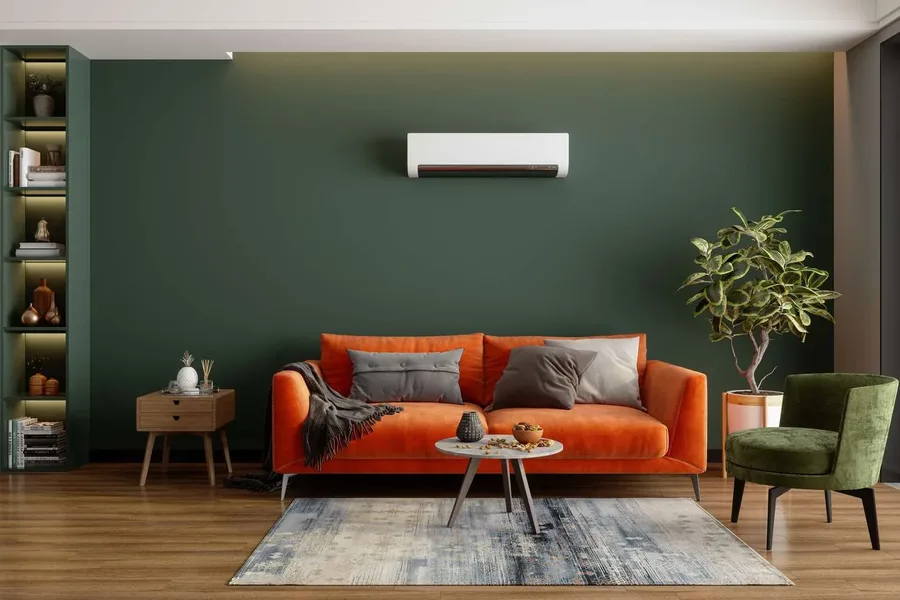
A wall-mounted DIY mini split heat pump in a living room: one indoor unit, one outdoor unit, and no ductwork, which is why these systems are the usual first self-install.
Heating down to −13°F across all single zone, multi zone and concealed ducted models. That is the same floor as MRCOOL's standard DIY 5th Gen and 18° lower than MRCOOL's Easy Pro (5°F). Higher-tier MRCOOL DIY models are rated lower.
It gets up to 24 SEER2 efficiency on 9,000 and 12,000 BTU 230V wall mount units, which is the highest of the pre charged quick-connect brands compared here (MRCOOL's best single zone is 23.6). The 115V models are 23 SEER2, which is a touch under the 23.5–23.6 that MRCOOL's 115V units get.
It has pre charged quick-connect line sets cut to any whole foot from 5 to 75, so you don't need a vacuum pump, brazing equipment or refrigerant gauges. Of the brands compared here, Zone Air is the only one that cuts the line set to the length you measure (as of October 2026).
It offers 115V options for 9,000 and 12,000 BTU units that run on a dedicated 15A circuit, so you can skip running a 230V circuit in many installations. With the optional 3-prong cord kit they plug into a dedicated GFCI outlet where local code lets you.
You can mix wall mount, ceiling cassette and concealed ducted indoor units on one outdoor unit. As of October 2026 it is the only DIY mini split that lets you do that.
The rest of this article can walk you through how to decide if a DIY mini split is right for your space, how to size your system, and how Zone Air fits against other brands and other manufacturers in the market.
Quick Picks: Best DIY Mini Splits for Different Homes
Before we get into the deep dive, here's a quick guide that might help. Each pick is a DIY mini split heat pump that you can use for both heating and cooling.
Best Overall Cold-Climate DIY Mini Split: Zone Air 12,000 BTU heat pump - heats to −13°F, up to 24 SEER2 on the 230V model, pre charged quick-connect line set in the box, covers up to 600 square feet. As of October 2026 the 115V model is $1,999.99 and the 230V model is $2,199.99.
Most Widely Stocked Alternative: MRCOOL DIY 9,000–12,000 BTU (5th Gen) - the best-known way to get into the DIY space, with pre charged quick-connect line sets and 23.6 and 23.5 SEER2 ratings. At Home Depot in September 2026, the 12K 115V kit ran about $2,359, so it is not the budget pick people often think it is.
Best for a Small Bedroom or Home Office: Zone Air or MRCOOL 9,000 BTU 115V - quiet output, a dedicated 15A circuit instead of a 230V line, and enough capacity for rooms around 250–450 square feet. Zone Air's 9K 115V ($1,899.99, October 2026) can plug in with the optional cord kit. MRCOOL's 115V units are hardwired.
Best for a Garage or Workshop: 18,000+ BTU 230V unit - Zone Air's 18,000 BTU 230V wall mount ($2,599.99, October 2026) handles spaces that are larger and not as well insulated. Add 20–30% capacity over what you would use for a standard room size to make up for poor insulation and doors that open a lot.
Best for Mild Climates Where Heating Is Secondary: Budget single zone DIY systems from Klimaire or similar brands - enough cooling and moderate heat performance at affordable prices, usually in the $800–$1,200 range for 9,000–12,000 BTU units with lower SEER2 ratings.
What Is a DIY Mini Split Heat Pump?
A ductless mini split system has an outdoor unit (condenser/compressor) and one or more indoor air handlers, with lines for refrigerant that run through a small hole in the wall. There's no central ductwork involved. With multi zone systems, one outdoor unit connects to multiple indoor air handlers so you can condition several rooms on your own.
Here are the key terms worth understanding:
Mini split air conditioners vs. heat pumps: Mini split air conditioners cool only. Mini split heat pumps provide both heating and cooling by reversing the refrigerant cycle. Most modern DIY mini splits sold in 2026 are heat pumps.
"DIY" in 2026: A DIY mini split comes with pre charged, quick-connect refrigerant line sets. So what do you need to get started? You don't need a vacuum pump, you don't need flaring tools. You don't need an EPA 608 certification. Zone Air and MRCOOL DIY systems both do it this way. You can install these without a refrigerant license.
Single zone systems: These are suitable for one room or open area-one outdoor unit paired with one indoor head. This is the most common DIY configuration.
Typical DIY tasks: Mounting the indoor head on the wall, placing the outdoor unit on a pad or bracket, running the line set through a 2–3 inch wall hole, connecting the condensate drain and wiring electrical connections per local code.
Electrical note: Even with a DIY system, 230V models may still need a licensed installer or electrician for the new circuit. The 115V models from Zone Air (9K and 12K BTU) make this step a lot simpler, since all they need is a dedicated 15A circuit. MRCOOL DIY systems also use line sets that are pre-charged and quick-connect.
Why Zone Air Stands Out Among DIY Mini Splits in 2026
Zone Air has positioned itself as a leading cold-climate DIY mini split brand by combining specs that usually need professional installation with a genuinely homeowner-friendly design. Here's what sets it apart from the pack:
Cold-weather heating to −13°F: Every Zone Air model-wall mount, ceiling cassette, concealed ducted, single zone and multi zone-is rated for heating operation down to −13°F, and for cooling in outdoor temperatures up to 131°F (MRCOOL publishes 122°F). It can work across much of the northern U.S. and parts of Canada when it's properly sized for the space. These cold-climate models keep their efficiency when the outdoor temperature gets low, which is when the cheaper systems shut down.
Up to 24 SEER2 with inverter technology: The 9,000 and 12,000 BTU 230V wall units get up to 24 SEER2, while the 115V versions hit 23 SEER2. The wall-mount multi zone packages are also rated at 24 SEER2. This improved efficiency can help cut your electricity bills compared to older central AC or baseboard heat, especially if you use it a lot.
True DIY quick-connect installation: The factory pre-charged the refrigerant lines with brass fittings, so you don't need a vacuum pump, gauges, brazing or EPA 608 certification. The refrigerant is sealed in the line set and never opens to the air. Follow the manual, tighten the connections and you're done with the refrigerant side.
Custom-length pre-charged line sets up to 75 feet: Instead of dealing with excess tubing coiled against your house, Zone Air offers custom-length linesets that match your actual run distance, any whole foot from 5 to 75. With the 25, 33, 50 and 75 ft sets, you have one continuous factory-sealed run with no field joint. MRCOOL sends fixed 11.5, 16, 25, 35 and 50 ft sets, puts two together with a coupler past 50 ft, and has you coil the excess.
115V plug-in option: The 9,000 and 12,000 BTU 115V models run on a dedicated 15A circuit, and with the optional cord kit ($49.99) they plug into a dedicated GFCI outlet where local code lets you do a plug-in install. Never use an extension cord. That makes installation simple in finished rooms, garages and small apartments where you don't have to run new 230V wiring. MRCOOL's 115V units are hardwired.
Wall, cassette and concealed ducted on one outdoor unit: One 27,000 BTU outdoor unit runs two or three indoor units of any style, so you can mix them however the rooms need. As of October 2026, Zone Air is the only DIY mini split that lets you mix wall mount, ceiling cassette and concealed ducted units on one outdoor unit, and its Thin-Air concealed ducted unit is the only DIY concealed ducted mini split on the market. MRCOOL does not have a concealed-duct unit that you can install yourself. The cassette and concealed heads are rated 19–22 SEER2, which is below the rating of the wall units.
Strong DIY warranty: Zone Air's warranty includes 5-year parts and 7-year compressor coverage with no registration deadline, even when installed by the homeowner-as long as you follow the manual and local codes. That's not always the case with other brands, where warranties usually vary based on installation type and brand. MRCOOL's DIY 5th Gen has the same terms. Its DIY Select line comes with 1-year parts and 2-year compressor coverage.
Direct from the manufacturer: Sold direct at zone-air.com, with live technical support 8 AM–6 PM MT, an install video library and a written DIY manual. Final assembly, testing, and inspection happen in the USA from globally-sourced components.
DIY Mini Split vs. Pro-Installed Mini Split vs. Central AC
Knowing when a DIY system makes sense-and when it doesn't-is what saves you money and headaches. Here's how the three main options stack up when you compare them to each other:
Upfront cost: A DIY mini split system runs $800–$2,500 for the equipment. You pay little or no labor cost. Professional installation of a single-zone ductless system usually costs $1,500 to $3,000 per zone on top of the equipment, so the total comes to $2,400 to $6,000. Multi-zone systems can cost $6,500 to $15,000 or more when professionally installed. For a full house, central AC or a heat pump system generally starts around $6,500 and can go past $15,000.
Best use cases: DIY mini splits shine in additions, garages, workshops, bonus rooms and smaller homes or cabins. Central AC works well for whole-home jobs that already have ductwork in place. Pro-installed ductless systems make sense for complex multi zone designs where the line runs are long or difficult to get to.
Efficiency: A ductless mini split avoids the about 30% energy loss that happens through ducts in a typical central AC system. Most ductless heat pumps also have higher SEER2 ratings than older central units, which means you pay less for electricity for each BTU that gets delivered.
Comfort and zoning: Mini split systems let you control the temperature in each room on its own. Central AC heats or cools the whole house to one thermostat setting, which may leave some rooms too warm and others too cool.
When not to DIY: Historic homes with strict code requirements, steep roof-line runs or multi zone refrigerant piping that needs professional brazing. Also any situation where you're not comfortable drilling through walls and making electrical connections. In those cases, it's a good idea to hire a licensed installer.
What to Look For in a DIY Mini Split Heat Pump
Beyond brand names like Zone Air or MRCOOL, the specific features are what determine whether a system will keep you comfortable and save you money over time.
Performance features:
Inverter compressor (it has variable speed, not on/off cycling)
SEER2 rating of 21+ for heavy-use spaces. 17–20 SEER2 as a starting point
The HSPF2 rating is about how efficient the heating is, and a higher number is better in cold climates.
Low-temperature heating capability with published capacity curves, not just a claim about the minimum temp.
There should be a third-party listing behind the published ratings. AHRI certification is an example of this.
Installation features:
Factory pre charged quick-connect line set, so you don't need a vacuum pump or a refrigerant license.
You need line set lengths that match your actual run, and Zone Air has options up to 75 ft.
Clear DIY manual with step-by-step instructions, and the mounting hardware is included.
The electrical requirements depend on the size of the unit. Smaller units run on a dedicated 115V circuit (plug-in on some), while larger models need a dedicated 230V circuit.
Usability features:
Indoor sound levels below 30 dB for bedrooms. Under 35 dB for living spaces
There is sleep mode, a programmable timer and a multi-speed fan
Wi-Fi or smart thermostat compatibility so you can control it remotely
Adjustable louvers and swing modes for even air distribution
Durability and warranty:
There are coils that resist corrosion so they last longer in coastal or humid environments
The compressor has a warranty of at least 7 years. Parts coverage of 5+ years
DIY installation that doesn't void the warranty (confirm with manufacturer)
Newer refrigerants like R-454B are better for the environment than older types like R-410A, and they are now the standard in the top DIY systems
How to Size Your DIY Mini Split
Proper sizing is more important than picking the best unit on the market. What does happen if you get an oversized mini split? It will short-cycle, turning on and off rapidly. That uses up energy and wears out the compressor. It also leaves rooms feeling damp. A unit that's too small just isn't able to keep up. Sizing according to BTU output is critical for heating or cooling efficiency.
Ballpark BTU guidelines by room size:
BTU Rating
Approximate Square Footage
9,000 BTU
250–400 sq ft
12,000 BTU
300–550 sq ft
18,000 BTU
600–1,000 sq ft
24,000 BTU
1,000–1,400 sq ft
BTU covers different square footage capacities, and these numbers assume you have decent insulation, 8-foot ceilings and a moderate climate
Adjustments to make:
Garages and workshops: Add 20–30% capacity because of poor insulation and doors that open often
High humidity: Add 10–15% in climates that are very humid
Tall ceilings: Add about 10% for ceilings that are above 8 feet
Cold climates: Size your mini split based on the heating load, not just the cooling load, because heat pump capacity drops as the outdoor temperature falls. A 12,000 BTU unit that is rated at 47°F may only deliver 8,000–9,000 BTU when the temperature is at 5°F.
For tricky situations-multi-story spaces, unusual floor plans or extreme climates-use a Manual J-style online calculator or contact the manufacturer's support team. Getting the right size mini split upfront prevents the most common comfort complaints.
What SEER2, HSPF2 and Energy Star Mean for Mini Splits
Since 2023, all new mini splits in the U.S. are rated under SEER2 and HSPF2 standards, which replaced the older SEER and HSPF numbers. If you're comparing a 2026 unit to something from 2021, the numbers won't line up in a direct apples-to-apples way.
SEER2 is the measure of seasonal cooling efficiency. It shows how much cooling output you get per unit of electricity over a typical cooling season. High SEER ratings mean better cooling efficiency. For context, pro-grade units from other manufacturers can reach big SEER numbers: Mitsubishi mini splits can achieve up to 33.1 SEER efficiency, Daikin's Atmosphera line reaches 27.4 SEER efficiency, and Fujitsu's Halcyon Series can achieve 26 SEER efficiency. In the DIY space, the upper tier is 21–24 SEER2 (like Zone Air's top models).
HSPF2 ratings are the measure of the heating efficiency of heat pumps over a range of outdoor temperatures. Higher HSPF2 means the system uses less electricity for every BTU of heat it delivers. This measure is most important in cold climates where the system runs in heating mode for months.
Energy Star certification: ENERGY STAR certified ductless heat pumps can use up to 60% less energy than electric resistance heat. They must meet minimum SEER2 and HSPF2 limits and they usually include advanced inverter controls.
Target ranges for DIY mini splits: 17–20 SEER2 is a solid start for moderate climates. 21–24 SEER2 pays off in areas where you use the system a lot or where electricity costs are high. At 24 SEER2 on 230V, Zone Air's wall units are the highest-efficiency pre charged quick-connect DIY system of the brands compared here.
Diminishing returns: Jumping from 17 SEER2 to 22 SEER2 saves you noticeable money on your energy bills. Jumping from 22 to 24 saves less money for each dollar you spend on the equipment. Extremely high SEER2 is most valuable in long-run, heavy-use scenarios. In a lightly used guest room, you may not recoup the premium.
Cold-Climate Performance: Heating with a DIY Mini Split in Winter
More homeowners are using ductless heat pumps as primary heat in cold climates, but performance can vary dramatically by brand and model. A mini split that works fine at 30°F may struggle or shut down at 0°F. With a DIY installation, you'll need to check your local climate conditions to make sure the system you choose actually matches your winter reality.
What "low-ambient" or "hyper-heat" means: These terms describe heat pumps that are engineered to keep up their heating capacity well below freezing. Instead of just looking at the minimum temperature on the spec sheet, you'll want to look at how many BTUs the unit still delivers at that temperature.
Zone Air: Engineered to continue heating down to −13°F across its entire product range, making it viable for large parts of the northern U.S. when the unit is properly sized for the heat load of the space. Its spec sheets publish the outdoor operating range for every model.
Mitsubishi: Mitsubishi mini splits keep working down to −13°F in their cold-climate hyper-heating models. The pro-grade units reach up to 33.1 SEER.
Daikin: Daikin mini splits can keep running in temperatures as low as −13°F in select cold-climate lines.
MRCOOL: The standard DIY 5th Gen is rated to about −13°F, the same floor as Zone Air. The Easy Pro line will heat to 5°F. If you run the single zone 12K and 18K DIY Hyper Heat models, you get heat down to −22°F, though the capacity is reduced at those ends. Only those two single zone models carry the Hyper Heat rating.
Senville: The Senville Aura Series operates effectively down to −22°F, providing another cold-climate option for budget-conscious buyers.
Capacity curves matter more than minimum temp claims: Check the rated heating capacity at the outdoor temperatures you're actually going to see. Look at 17°F, look at 5°F, and look at the lowest rated point the manufacturer lists. A unit saying −22°F operation but only delivering 40% of rated capacity at that temp may not keep your house warm enough.
Backup heat: In very harsh climates (regularly below −15°F), even the best cold-climate DIY heat pump may need supplemental heat-electric resistance, gas or a pellet stove-to handle the coldest nights.
DIY Installation Basics for Mini Split Systems
While a DIY mini split simplifies refrigerant work, safe installation still requires planning, basic tools and respect for local building codes. Most DIY mini split installations can be completed in a weekend with a helper.
You'll want to pick the wall location for the indoor air handler: usually high on an exterior wall, close to where you plan to put the outdoor unit, with space above furniture and out of direct sunlight.
Mount the indoor unit with the mounting plate that comes with it, and make sure it's level.
Drill the wall penetration: a 2–3 inch hole that angles slightly downward toward the outside so the condensate has a way to drain out.
Set the outdoor condenser on a concrete pad, a wall bracket or a stand at ground level. Make sure there is enough clearance on all sides for airflow.
Run the pre charged line set through the wall, connecting the indoor unit to the outdoor unit. With quick-connect systems like Zone Air's, you tighten brass fittings with wrenches to the specified torque-no vacuum pump, no brazing.
Connect the condensate drain so water is directed away from the building.
Do the electrical work: A DIY mini split usually needs a dedicated electrical circuit. For 115V units, this means a dedicated 15A circuit, which on a Zone Air unit can end in a GFCI outlet for the optional cord kit. For 230V units, you'll likely need to add a new double-pole breaker and run heavier gauge wiring. You may need accessories like electrical circuits and mounting brackets for installation.
Safety tips: Shut off power at the panel before any electrical work. Follow the manufacturer's installation manual step-by-step. Don't take the quick-connect seals off until you are ready to make the connection.
When to call a pro: If you're not comfortable drilling through exterior walls, running new circuits or following detailed torque specifications, bring in an electrician for the wiring and handle the mechanical side yourself. If you install it wrong, you can get refrigerant leaks, worse performance or a voided warranty.
Comparing Top DIY-Friendly Brands: Zone Air, MRCOOL DIY and Others
In 2026, homeowners who are shopping for a DIY system generally compare Zone Air, MRCOOL DIY and a handful of budget alternatives. Here's how they line up.
Zone Air:
Every model has cold-climate heating that works down to −13°F. Cooling to 131°F
Up to 24 SEER2 (9K–12K 230V wall units). 23 SEER2 at 115V
You can get custom-cut pre charged line sets in any whole foot from 5 to 75 ft
115V and 230V options. Single zone and multi zone packages that mix wall, cassette and concealed ducted units
5-year parts, 7-year compressor warranty valid for DIY install, no registration deadline
30-day returns on uninstalled units, free shipping to the lower 48
MRCOOL DIY is a popular choice for homeowners looking for DIY options, with a broad 5th Gen product line (the 4th Gen multi zone is being closed out)
Pre charged quick-connect line sets included (usually 25 ft in the kit; 11.5, 16, 25, 35 and 50 ft sets sold, couplers to reach 75 ft)
SEER2: 23.6 (9K 115V), 23.5 (12K 115V), 22.5 (18K) on MRCOOL's standard DIY 5th Gen. 23.5 on the 12K Hyper Heat. 16.5–17.5 on DIY Select
MRCOOL DIY systems are designed for easy installation by homeowners, with a large online community for support
MRCOOL's warranty on the DIY 5th Gen: 5-year parts, 7-year compressor, no registration required; DIY Select is 1-year parts, 2-year compressor
No manufacturer return policy. Returns depend on the seller
In September 2026, the 12K 115V kit was about $2,359 at Home Depot, which is about $360 more than Zone Air's 12K 115V. In October 2026, MRCOOL's 18K dual zone kits were running $3,110–$3,230. That prices under Zone Air's dual zone packages.
Pro-grade brands for reference (not DIY):
Mitsubishi offers a 12-year warranty on select models and can reach up to 33.1 SEER, but it needs professional installation.
Daikin provides a 12-year warranty on parts and compressors, and select models reach 27.4 SEER.
Fujitsu has mini splits in the Halcyon Series that can get up to 26 SEER
These brands give you top-tier performance but they are not built for you to install yourself, and the installed prices are a lot higher.
Budget brands (Klimaire, etc.):
These are cheaper ways to get started, and you can often find units in the 9K to 12K BTU range for $800 to $1,200.
Lower SEER2 ratings (17–20 range is common)
Warranty rules can vary for self-install, and some need professional installation to keep full coverage.
They'll generally do fine in mild climates where you don't need much heating.
The key trade-off: Zone Air and MRCOOL's standard DIY 5th Gen share the same −13°F floor and the same 5/7 warranty terms, so the real differences are the custom-cut line sets, the plug-in 115V option, the mixed-style multi zone packages and the 230V efficiency rating on one side. On the other side, there is a wider retail footprint and the 18K dual zone kits are cheaper.
Cost Breakdown: DIY Mini Split vs Hiring an Installer
It helps to understand all the costs, not just the price tag, so you can plan a realistic budget and decide whether to do the project yourself or hire it out.
DIY mini split costs:
Equipment runs $800–$2,500 for each single zone heat pump depending on how many BTUs it has, what the SEER2 rating is, and which brand you pick.
Optional materials include a concrete pad ($20–$60), wall brackets ($30–$80), and electrical supplies ($50–$150). You will also need basic tools like a drill, a hole saw, wrenches and a level.
An electrician for a new 230V circuit will cost $200–$500 depending on the distance from the panel and the local rates in your area. A 115V unit only needs a dedicated 15A circuit, so you can skip this if one is already in place.
With a DIY mini split system, you can save the full cost of installation compared to hiring a full HVAC contractor.
Professional installation costs:
The cost to install a single-zone mini split is $2,400 to $6,000 when you include both the equipment and the labor.
Multi-zone systems can cost $6,500 to $15,000 or more depending on the number of zones and complexity.
Each additional indoor head is going to add $1,500 to $4,000 to the cost of installation.
Professional installation will usually cost $1,500 to $3,000 per zone for the labor and the materials alone.
Example budget scenario: A homeowner installing a Zone Air 12,000 BTU 115V in a garage might spend $1,999.99 for the unit (October 2026), $49.99 for the plug-in cord kit, $50 for a pad, and $0 for electrical if a dedicated 15A GFCI outlet is already there. Total: about $2,100. With professional installation, the same job with a similar ductless system could easily run $3,500–$5,000.
Properly installed DIY systems like Zone Air can still qualify for some utility rebates and incentives when they meet the program's SEER2 and HSPF2 limits and listing rules, but paperwork requirements vary by program.
Mini Split Heat Pump vs Electric Baseboard, Space Heaters and Window AC
Many DIYers are replacing resistance heaters and window AC units with mini splits so you can save on electricity and get year-round comfort. Here's how they compare:
Efficiency: A heat pump usually delivers 2–4 units of heat for every unit of electricity it uses. Electric baseboards and space heaters are always 1:1-every watt in equals one watt of heat out, with no efficiency boost. Over the course of a winter, this difference can cut your heating costs by 50–70% in moderate climates.
Comfort: Mini split systems provide even, consistent heat distribution with dehumidification in summer and quiet continuous operation. Window AC units are noisy and drafty, and they block natural light. Space heaters create hot spots near the unit, and they create cold spots everywhere else.
Operating cost example: Heating a garage that is 400 square feet in a cold-climate winter with plug-in space heaters that run at 1,500W might cost $150–$250 per month in electricity. A mini split heat pump that is properly sized to cover the same space could cut that cost to $50–$100 per month because it has an efficiency advantage.
Cooling comparison: An efficient mini split at 22–24 SEER2 uses a lot less electricity than a window AC that is rated at 10–12 EER for the same cooling output. You will notice the difference on your power bill when the summer gets hot.
Air quality: Mini splits filter the indoor air all the time. Window units pull in outdoor air and dust. Space heaters can dry out the air too much. The ductless system has the most balanced air environment of the three.
Noise, Air Quality and Everyday Comfort with Mini Splits
Beyond BTUs and SEER2, everyday comfort depends on how the system sounds and what it does to your air quality.
Noise levels:
Bedroom-quiet mini splits run in the 20s to low 30s dB at their lowest fan setting, which is similar to a soft voice or leaves that are moving in the wind.
Living rooms and garages are fine with units that run in the upper 20s to low 30s dB.
Most quality DIY mini splits fall within this range at normal operating speeds: Zone Air's wall units run as low as 30 dB on quiet mode, and MRCOOL lists its 12K wall head at 18 dB(A)
Air filtration:
Mini splits filter the indoor air all the time through washable pre-filters that catch dust, pet hair and larger particles. You should clean or rinse the filter regularly if you want the best results.
These filters are not a substitute for MERV 13 filtration or whole-home air purifiers. If you have allergies or asthma, think about using the mini split with a separate air purifier.
Humidity control:
Mini splits in humid climates have to pull moisture from the air during cooling. Most units have a dry (dehumidify) mode that puts moisture removal first instead of temperature reduction.
In winter, a heat pump doesn't add moisture to the air when it runs, so you may need a humidifier in very dry climates.
Comfort features worth looking for:
Louvers you can adjust and auto-swing modes to get even air distribution
Sleep mode that slowly turns the fan speed down and turns the noise down through the night
Programmable timers that get rooms ready before you get there
Maintenance Tips for Your DIY Mini Split
Even the best DIY mini split heat pump will lose 10–25% of its rated efficiency if you neglect it. A little regular upkeep goes a long way to keep performance close to the numbers on the spec sheet.
Routine homeowner tasks (every 2–4 weeks during heavy use):
Clean or rinse the washable filter on the indoor unit, because a clogged filter cuts airflow down and makes the system work harder
Wipe down the cover on the indoor unit so dust doesn't build up on the louvers
You should check the condensate drain line for clogs. A blocked drain can cause water damage or it can set a safety shutoff off
Seasonal maintenance:
You'll want to keep the outdoor unit clear of leaves, snow, ice and debris and maintain at least 12 inches of clearance on all sides
Check the insulation on the line set for damage from UV exposure, animals or weather and replace any sections that have gone bad
Watch for error codes on the display or remote and address them promptly using the manual
Periodic deeper care (once a year or every other year):
Clean the indoor coils and the outdoor coils gently with a soft brush, or use a coil cleaner spray to clean them
Make sure the drain holes on the outdoor unit aren't blocked
In harsh climates or heavy-use applications, you should schedule a professional check every 2–3 years even for DIY-installed systems
Heat pumps that are kept in good shape stay closer to their rated SEER2 performance, and they help you avoid having the compressor or the fan fail too soon
Tax Credits, Rebates and Incentives for Mini Split Heat Pumps in 2026
Federal and local incentive programs have evolved since 2025, so it's worth checking the current rules before you buy.
Federal tax credits: The Section 25C credit under the Inflation Reduction Act allowed up to 30% of project cost (cut off at $2,000) for qualifying heat pump installations, but it ended for equipment placed in service after December 31, 2025. A mini split that gets installed in 2026 does not qualify for this credit. Check the IRS website or talk to a tax professional to find out if anything replaces it
State and local utility rebates: Many utilities have rebates for heat pumps that are energy-efficient. Minnesota Power gives $400 for ductless heat pumps that are Energy Star certified and that have SEER2 ≥ 15.2 and HSPF2 ≥ 7.8. South Central Indiana REMC gives $300 for an install with a single zone and $500 for an install with multiple zones that has SEER2 ≥ 17.3. These programs are different in what they pay and what they need
Eligibility requirements: Most rebate programs need a minimum SEER2 rating and a minimum HSPF2 rating. Some have a requirement for certified installation documentation even for DIY systems. Zone Air units are AHRI Certified. Some programs ask for a specific listing, so check what the requirement is for each program before you count on getting a rebate. Zone Air's rebate search is a quick place to start
What to keep on file: Keep your purchase receipts, model numbers, efficiency ratings from the spec sheet, and installation dates. You might also need photos of the installed system and proof of permit if your jurisdiction requires one.
This section is general guidance, and it is not tax or legal advice. Check current official resources like the DSIRE list or your utility's website so you can get the most up-to-date details about the program.
When to Choose a DIY Mini Split
DIY mini splits are more capable than ever, but they're not for every home or every homeowner. An honest assessment can save you time, money and frustration.
DIY makes sense when:
You're working on a single zone space, like a garage, a bonus room upstairs, a home office, a small apartment or a cabin
The line set route goes through one exterior wall and is short and simple. The outdoor unit is nearby
You have accessible electrical, especially with 115V plug-in units
You're comfortable with basic tools like a drill, a hole saw, wrenches, a level and reading a detailed manual
You want to save $1,500–$3,000+ in installation labor
Hire a professional when:
You need a multi zone system with complex refrigerant piping
Line runs are long, go through multiple walls or need to run through the attic or crawl space
Your local jurisdiction requires permits and inspections that assume professional installation
There are structural concerns like brick, stone or historic walls, so drilling gets harder
You're not comfortable with electrical work, heights or following precise torque specifications
Systems like Zone Air are deliberately designed to make DIY feasible for capable homeowners. But safety and code compliance always come first. If you're unsure, consult a local electrician or HVAC tech before committing. The cost of a consultation is a small fraction of the cost of a botched install.
Next Steps: Picking and Installing Your Best DIY Mini Split Heat Pump
Moving from research to action comes down to four decisions: the right size, the right cold-climate performance, the right efficiency and the right installation plan for your skill level.
Confirm your room size and climate: Measure your square footage, note the ceiling height and how good your insulation is, and look up your local design temperatures. In cold climates, the heating load should drive your BTU choice, not just the cooling load.
Shortlist brands: Zone Air is a top cold-climate DIY choice for its −13°F heating, up to 24 SEER2 efficiency at 230V, and custom pre charged line sets. MRCOOL DIY offers wider retail availability. Budget brands work for mild climates where heating is secondary.
Compare SEER2, HSPF2 and minimum temperature ratings: Don't just look at the nameplate BTU-check capacity at 5°F and 17°F if you're in a cold climate. The numbers on the spec sheet are going to tell you more than marketing language.
Check that your electrical setup can handle it: Can you plug the unit into a 115V outlet, or do you need to run a new 230V circuit? You'll need to factor in electrician costs if you need one.
Create a project checklist: Tools, mounting hardware, permits (if required), and weather timing. Installing during spring or fall when it's the off season is easier than mid-winter or peak summer.
Order your system: Once you've matched size, efficiency and electrical requirements to your space, place the order and line up any electrical work ahead of time.
If you want one of the most capable cold-climate DIY mini split heat pumps available in 2026, explore Zone Air's current models and support resources. Their combination of −13°F heating, top-tier efficiency, custom line sets and a warranty that doesn't punish you for installing it yourself makes the brand a strong starting point for your project.
Specs, prices and warranty terms are manufacturer-published as of October 2026, subject to change; verify before purchase. MRCOOL® is a trademark of its owner; this article is not affiliated with or endorsed by MRCOOL.