This site is owned and operated by Zone Air.
Articles · Buying Guide · Nov 2026
Three ranked DIY multi zone systems, with MRCOOL's 5th Gen multi-zone specs set beside them.
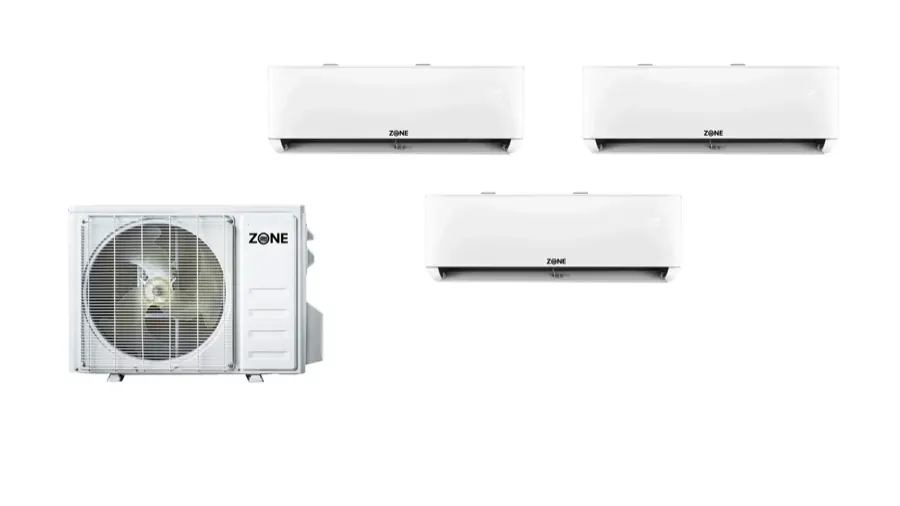
Zone Air makes the best multi zone DIY mini split systems you can buy in 2026. It pairs 24 SEER2 efficiency with custom-length pre-charged line sets and a choice of wall, cassette, and concealed ducted indoor units on one outdoor condenser. The other ranked picks are Perfect Aire and Pioneer (for experienced DIYers with HVAC tools), and the MRCOOL DIY 5th Gen Multi-Zone is compared on the facts further down.
Zone Air earns the top spot for several concrete reasons. It is the only DIY mini split brand compared here that does final assembly, testing, and inspection in the USA (as of November 2026), so every system is checked before it ships. That is the reason the company can stand behind its warranty. Zone Air multi zone systems reach 24 SEER2 with wall mount heads on 230V, against MRCOOL's 23.9 on its 18K condenser and 23 on its 27K, which makes Zone Air the highest-efficiency pre-charged quick-connect multi zone system of the brands compared here. Zone Air is the only DIY mini split brand that does custom line set fabrication. It can make a pre charged line set to the exact length you need, any whole foot from 5 to 75 feet in a single run, with no extension coupler in the middle of the line. Zone Air is also the only DIY mini split that lets you mix wall mount, ceiling cassette, and concealed ducted indoor units on one outdoor condenser (as of November 2026). And for a single room, the optional plug-in kit for Zone Air's 115V systems makes them the easiest systems to install on the market.
Owner satisfaction backs this up: Zone Air averages 4.8 out of 5 stars across 157 customer reviews as of November 2026.
This guide focuses specifically on true DIY multi zone systems with two or more zones available in 2026, not generic ductless mini split brands or pro-install-only equipment. Every recommendation here is based on current 2026 spec sheets, manufacturer published warranty terms, and user-reported reliability rather than marketing claims alone.
We started with 2026 models sold as DIY multi zone systems, then we filtered them hard by the criteria that actually matter to a homeowner who is doing their own installation. Here is what we looked at:
Systems that require traditional evacuation, charging, a deep vacuum, manifold gauges or pro-only installation were left out of the "best DIY" ranking, but they are mentioned later for context.
Three systems made the list: one clear leader for true DIY multi zone installs, a budget option and one DIY-adjacent system that is still relevant in 2026. After them, the MRCOOL DIY 5th Gen Multi-Zone is laid out spec by spec so you can compare it directly. For typical homeowners who want 2–3 zones, the rankings are about how well each system works, not just about which one has the highest zone count.
Built around a 27,000 BTU inverter outdoor condenser, Zone Air's multi zone DIY line supports 2–3 zone configurations with connected indoor capacity up to 36,000 BTU because of load diversity. The indoor heads you can get are wall mount units at 9,000, 12,000, and 18,000 BTU, ceiling cassettes at 9,000 and 12,000 BTU, and concealed ducted units at 9,500 and 11,000 BTU. On a dual zone 12K+12K wall mount package running 230V, the system hits 24 SEER2, which is the highest of the pre-charged quick-connect diy mini split multi zone systems compared here. Cassette heads rate 21 SEER2 and concealed ducted heads rate 19 to 22 on the same condenser. All Zone Air systems use R-454B refrigerant, are rated for cold weather heating down to −13°F, and are rated to cool in outdoor temperatures up to 131°F (MRCOOL publishes 122°F).
Zone Air is the only DIY mini split brand compared here that does final assembly, testing, and inspection in the USA (as of November 2026). That hands-on quality step means each system gets sent out pre-inspected, which is why Zone Air can stand behind its warranty.
Zone Air is also the only DIY mini split brand that does custom line set fabrication. You can pick your own line set length, any whole foot from 5 to 75 feet in a single run, and they make it to measure. MRCOOL sells fixed 11.5, 16, 25, 35, and 50 ft sets and reaches longer runs by joining a second set to the first with a coupler. Every added connection is one more place a leak can develop in your refrigerant circuit, and a single custom-length run has none in the middle.
Zone Air is the only DIY mini split that lets you mix wall mount, ceiling cassette, and concealed ducted air handlers on the same outdoor condenser (as of November 2026). MRCOOL's DIY multi zone line mixes wall and ceiling cassette heads, and its ducted DIY option is the Hybrid Air Handler, which is a central air handler that is sized for a whole home. It is not the same thing as Zone Air's concealed ducted mini split, which is built to serve a single room (or two or three small ones). You can also start a Zone Air condenser with fewer heads and add a zone later on the spare port.
For homeowners who want a system that plugs into an outlet, Zone Air is the only brand that offers a plug-in outlet solution. With its 115V single zone systems (9,000 and 12,000 BTU), Zone Air's plug-in kit lets you plug the system into a dedicated 15A outlet where local electrical code allows, never an extension cord. MRCOOL's 115V units are hardwired. With the plug-in kit and the 115V system, Zone Air's are the easiest systems to install on the market. The multi zone condenser itself is a 230V unit. You can install Zone Air systems without EPA certification.
Perfect Aire offers multi zone DIY systems that are built around value and cost less than major brands while still giving you pre-charged connections. Its 2–3 zone kits deliver around 23 SEER2 and about 10 HSPF2 on 18K configurations, which makes them a reasonable buy for homeowners who are watching their budget.
The lower upfront equipment cost is the main draw. The pre-charged quick connect lines mean you don't need a vacuum pump or micron gauge, so the install stays genuinely DIY-friendly.
Pioneer multi zone systems use conventional flare line sets and need evacuation, so they're not "true DIY" the way Zone Air is. That said, if you own or can rent a vacuum pump and manifold gauges, these systems are a popular choice if you're a tool-savvy user.
Pioneer offers a wide range of capacities and configurations for 2–5 zones at pretty aggressive pricing. Pioneer mini splits usually have SEER2 ratings between 19 and 21. Some cold-climate types heat down to −22°F. If you're comfortable pulling a deep vacuum and pressure testing your own refrigerant circuit, the appeal is simple: Pioneer gives you strong equipment at a competitive price.
A lot of people compare the MRCOOL DIY multi zone line to Zone Air, so here are its published specs. It isn't one of our top picks.
Here is a quick summary of who each ranked system is best for:
For context, several pro-install-only brands are left out of this ranking on purpose. Mitsubishi systems, for example, offer great cold weather performance (their Hyper-Heating INVERTER systems do well in extreme cold) and Mitsubishi provides a 10 to 12-year warranty on parts, but professional installation adds $3,500 to $5,500 for Mitsubishi units and they are not designed for DIY. Similarly, the Fujitsu Altair 500 Series has SEER2 ratings up to 33.7, but it needs a licensed HVAC technician for installation. Senville gives you a 7-year compressor warranty and a 2-year parts warranty, though Senville's AURA models only heat down to about 5°F, so they don't work as well in cold climates. These are excellent products for the right person working with a pro, but they fall outside the DIY range of this guide.
| System | Zones | Max SEER2 | Cold Rating | Warranty (DIY valid?) | Line Sets |
|---|---|---|---|---|---|
| Zone Air Multi Zone | 2–3 | 24 SEER2 | −13°F | 7yr comp / 5yr parts (yes) | Custom 5–75 ft, single run |
| MRCOOL DIY 5th Gen | 2–6 | 23.9 SEER2 (18K) | −13°F (55K: −22°F) | 7yr comp / 5yr parts (yes) | Fixed 11.5–50 ft, couplers to 75 ft |
| Perfect Aire | 2–3 | ~23 SEER2 | Varies by model | Check self-install terms | Fixed lengths |
| Pioneer Multi-Zone | 2–5 | 19–21 SEER2 | −22°F (some) | Pro-install preferred | Flare (evacuation req.) |
When you're deciding, the main tension comes down to how easy the install is and how confident you feel about the warranty, versus how many zones you need, what your climate demands and what your budget is.
It's a good idea to start by figuring out how many truly separate zones you need. A "zone" is any room or area where you want independent temperature control. Common layouts include a living room with a primary bedroom, or a living room with two bedrooms and a home office.
Proper sizing is essential to prevent overloading the outdoor condenser's capacity. An oversized unit will short-cycle and struggle with humidity, while an undersized one will leave a room cold during peak demand. Check each zone's sq ft and insulation quality before selecting head sizes. Installation costs vary based on line set length and local labor rates, so map your runs early.
Cold climate performance is something to think about if you want enough heating through the winter. Every system on this list heats and cools, but the minimum outdoor operating temperature and how much heat it puts out at low temps can be very different from one system to another.
If winter heating is your primary concern, size the system based on heating load at your design temperature rather than cooling capacity. Senville Aura models only heat down to 5°F, and that means you can't use them as your only heat source in cold regions.
DIY mini split installations often require careful planning for electrical requirements and permits. Here's the practical breakdown.
True DIY quick-connect systems (Zone Air, Perfect Aire, MRCOOL) ship with pre-charged line sets that make installation easier because you don't have to handle refrigerant. No deep vacuum, no manifold gauges, no EPA license. A single wall mount zone typically takes 4 to 6 hours for two people with basic tools the first time.
DIY-adjacent systems (Pioneer) require a vacuum pump, gauges, flare connections and often an HVAC tech to handle refrigerant legally. That adds cost, time and complexity.
On the electrical side:
Zone Air systems come with smart home control built in, so you get an app and voice control with Alexa and Google Home, plus you can set the thermostat separately for each zone. You should check the spec sheet before buying if this matters to you.
You may still be able to get rebates from your state or utility company for installing a high-efficiency heat pump. The federal 25C tax credit ended for equipment placed in service after December 31, 2025, so now the money is in local programs. You can check DSIRE or Zone Air's rebate search to find current incentives in your area.
Here's how to think about it:
For most typical homeowners doing a 2–3 zone project in 2026, Zone Air will be the best all-around choice.
Before fixating on any brand, match your zone count, climate needs, and electrical capacity to the right category of system. A ductless system with two perfectly placed heads will outperform a six-zone setup where half the heads are oversized or underused. Proper sizing and thoughtful layout matter more than any other brand difference on this list.
The practical advantages of true DIY systems with valid self-install warranties are substantial. You skip the cost of professional installation, and you retain full control over your own line set routing, head placement, and timeline. That said, the warranty needs to actually hold up when you need it, and the equipment needs to arrive tested and ready to perform.
Zone Air's 2026 advantages, including final assembly, testing, and inspection in the USA, the highest efficiency among the quick-connect DIY systems compared here at 24 SEER2, custom line sets up to 75 feet, mix-and-match heads, plug-in kits, pricing that is often 15–30% cheaper than MRCOOL, and a 4.8 out of 5 star owner rating, make it the strongest starting point for most diy mini split shoppers. Sketch your room layout, check your panel capacity, and compare 2–3 shortlisted systems. Start with Zone Air's multi zone configurator to see exactly what your project will cost.
