Best DIY Concealed Duct Mini Split Systems Homeowners Can Install in 2026
The best DIY concealed duct mini split systems for 2026: Zone Air Thin-Air is the only DIY concealed ducted option. Specs, prices, layout limits and install.
If you want the clean, hidden look of central air without paying contractor prices, one of the best DIY concealed duct mini split systems to install in 2026 is a smart investment. This guide has the breakdown of which systems exist, how they work and what it takes to install one yourself, with specific models, specs and honest advice about when to call for help.
Section 01
The Only DIY Concealed Ducted Mini Split on the Market
As of October 2026, Zone Air makes the only DIY concealed ducted mini split system on the market. So if you want a concealed ducted unit for individual rooms and you want to install it yourself, Zone Air is your only option. MRCOOL DIY and the other DIY brands stick to wall-mount and ceiling cassette heads. MRCOOL does sell a ducted DIY system, its DIY Hybrid Air Handler, but that's a full-size whole-home air handler, not a concealed ducted mini split that hides in a ceiling and serves one room.
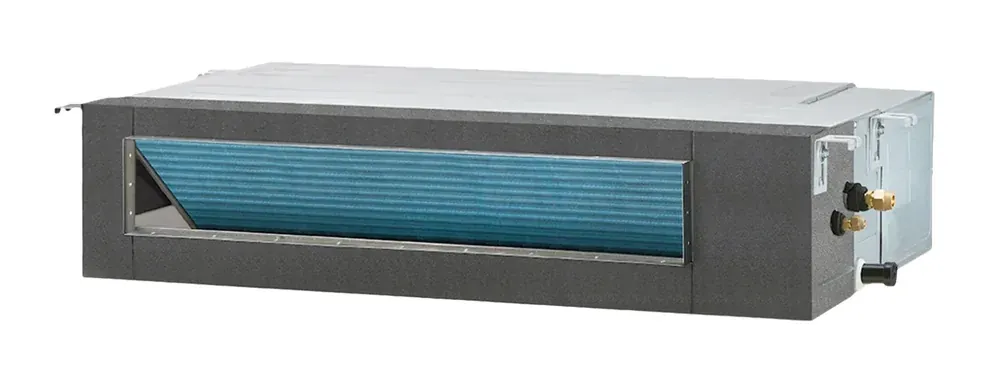
Zone Air's concealed duct system uses factory pre-charged R-454B refrigerant, so you don't need a vacuum pump or manifold gauges to connect it. With a 7-7/8 inch tall slim air handler, the indoor unit sits above your ceiling so it can send conditioned air through short ducts to simple grilles. Only the registers are visible in the room.
Traditional ducted mini splits from brands like Mitsubishi, Fujitsu and Daikin are sold so that a contractor has to install them, and they come with flare connections, pressure testing and licensed refrigerant handling that has to be done by someone with the right license. Standard DIY mini splits from MRCOOL are wall-mount or cassette units that need no ductwork, but you might find that they don't give you the hidden, multi-room distribution of a ducted system.
Here are some uses that would be a good fit for a DIY concealed duct system:
Whole-home heating and cooling is available for small homes of about 475–1,650 sq ft
Finished basements and attic conversions
Remodels and historic homes where a wall-mounted head on the wall might not work
Open-plan living spaces can get air from one or more ducted air handlers
This guide is about DIY concealed duct mini split systems only, not the generic wall-mount DIY mini splits you see everywhere, and it uses Zone Air's Thin-Air line as the reference model all the way through.
Concealed Duct Mini Split
What Is a Concealed Duct Mini Split?
A concealed duct mini split is a heat pump system that has a ducted air handler with a low profile. You can hide it in a ceiling bay, a soffit or a closet. Instead of blowing air straight into a room from a visible wall head that you can see, it pushes conditioned air through short insulated ducts so the air can reach ceiling or wall registers.
Here is how the three main system types might compare:
Feature
Ductless Wall-Mount DIY (MRCOOL, etc.)
Concealed Duct DIY (Zone Air)
Traditional Central HVAC
Indoor unit visibility
Visible wall head
Hidden - grilles only
Hidden - grilles only
Ductwork required
None
Short, simple runs
Large trunk and branch network
DIY installable
Yes
Yes (Zone Air is the only option)
No
Rooms served per indoor unit
1
Usually 2–3 rooms via short duct branches
Entire home
Efficiency (SEER2)
Up to about 24
19–22
Varies by system
Concealed duct mini splits combine the efficiency of inverter-driven mini split systems with the look of hidden ductwork, which makes them a good fit for higher-end remodels where a wall-mounted head would look bad with the design.
Most DIY mini split systems sold today are not ducted, so their manuals don't cover details about duct design like what the limits are for external static pressure. Zone Air's DIY concealed duct system lists an external static pressure range of 0.1–0.4 in. w.g. and a maximum duct length of 15 feet per supply, so homeowners can follow simple layout rules without engineering software.
Section 03
Why Zone Air Is the Only DIY Concealed Ducted Option
Zone Air is the only brand that sells a concealed ducted mini split you can install yourself. Other DIY brands either have no concealed ducted unit at all, or (like MRCOOL) only sell a full-size whole-home air handler. The big brands sell their concealed ducted units for professional installation with a vacuum pump and a licensed technician.
Here is where the major competitors stand:
MRCOOL DIY: MRCOOL might be the best-known name in pre-charged, quick-connect DIY mini splits. MRCOOL says its DIY 5th Gen systems need "no special tools or training" to install, and its quick-connect line sets come in 11.5, 16, 25, 35 and 50 ft lengths. Its 9K BTU model is rated for up to 400 sq ft, the 12K BTU for up to 550 sq ft. The 18K BTU for up to 800 sq ft. Using R-454B refrigerant, the standard DIY 5th Gen units heat down to -13°F, and the separate DIY Hyper Heat models are rated to -22°F. MRCOOL's DIY 5th Gen warranty is 5 years on parts and 7 years on the compressor. The multi-zone DIY heads from MRCOOL are wall-mount and OuttaSight ceiling cassette units, and its ducted DIY Hybrid Air Handler is a full-size whole-home unit. There is no slim concealed duct head in the DIY line.
Mitsubishi, Fujitsu, LG, Daikin: All make excellent concealed duct air handlers, but they're sold so a contractor has to install them. Their line sets need a vacuum pump and flare connections, and their warranties are written so that installation has to be done by a licensed contractor.
Pioneer and Senville: These budget brands sell ductless and multi zone systems with flare-connection line sets that need a vacuum pump. Senville's warranty says that coverage will be voided if you do a DIY installation.
Why is ducted so much harder to make DIY-friendly? Coming from ductwork, there are pressure drops and you need to manage condensate inside ceilings, run communication wire through the structure, and avoid refrigerant mistakes and all of that adds complexity. With a matched system from Zone Air, you get an outdoor unit, a concealed duct air handler, and pre-charged quick-connect line sets (sold separately in set lengths), plus published layout limits you can follow.
Section 04
How DIY Concealed Duct Mini Splits Work
Every mini split is basically a heat pump that has an outdoor unit and an indoor air handler. They are connected by refrigerant lines and a communication wire. When you put that indoor unit out of sight, the concealed duct version is sending air through ducts instead of blowing it from a wall.
The three main components:
Outdoor condenser: This is an inverter-driven heat pump that uses R-454B refrigerant. It has a variable-speed compressor that is rated in BTU capacity (9.5K or 11K single zone, or a larger multi zone condenser).
Concealed duct air handler: A slim unit (under 8 inches tall) with a blower fan, evaporator coil and built-in condensate pump, designed to sit in a ceiling bay, soffit or utility closet and push air into short supply ducts.
Pre-charged line set and communication wire: These are quick-connect refrigerant lines that come pre-filled with refrigerant, plus a control cable that connects the indoor and outdoor units.
The airflow path is simple: room air enters a return grille, passes through a filter at the air handler, goes over the coil for cooling or heating, then flows through short supply ducts to the registers.
Unlike multi zone ductless systems that have a separate wall head in every space, a concealed duct unit can split its airflow between nearby areas through short duct branches. Multi zone systems give you separate temperature control for each zone. The inverter compressor changes capacity to match the actual load. That keeps temperature steady, noise low and efficiency high compared to single-stage central systems.
Section 05
Top DIY Concealed Duct Mini Splits for 2026
Here are the Zone Air Thin-Air concealed duct configurations available in 2026, and all of them are built for pre-charged, quick-connect line sets:
Thin-Air 9,500 BTU Single-Zone: This covers up to 475 sq ft. The rating is 19.6 SEER2, HSPF2 10.0 (Region IV), and it runs on 208-230V on a 15A double-pole breaker. This is ideal for a large bedroom suite, home office or studio. Zone Air's 9K and 12K wall-mount units come in 115V versions, but every concealed ducted unit is 208-230V. Equipment price around $2,070.
Thin-Air 11,000 BTU Single-Zone: This covers up to 550 sq ft. Using R-454B, the rating is 19 SEER2, and it runs on 208-230V. This unit is a good fit for a primary suite or an open living and dining area. Equipment price around $2,470.
Thin-Air Dual-Zone 20,500 BTU (11K + 9.5K): Two concealed air handlers are sharing one outdoor unit, covering up to 1,025 sq ft across two zones you can control on their own. The rating is 19 SEER2, HSPF 10. Heats down to -13°F.
Thin-Air 3-Zone 33,000 BTU: Three 11,000 BTU concealed duct indoor units, covering up to 1,650 sq ft total. This 3-zone model is rated 22 SEER2 ducted, with HSPF2 9.0 (Region IV). The indoor sound level is 39 dB on the lowest fan setting.
Zone Air also sells a 22,000 BTU (11K + 11K) dual-zone, a 19,000 BTU (9.5K + 9.5K) dual-zone, and a 28,500 BTU (9.5K x 3) 3-zone concealed kit. Its concealed duct systems are kept to 1–3 air handler setups so duct balancing and static pressure stay easy enough for homeowners to handle, and making a concealed duct unit too big can hurt humidity control. That point is covered in the planning section below.
Section 06
What Sets Zone Air's Concealed Ducted Units Apart
Being the only DIY concealed ducted mini split on the market is the big one, but there are a few other things that set the Thin-Air units apart:
One unit, two or three rooms: each concealed unit can feed 2–3 rooms through short duct branches. Rooms that share a unit share one temperature setting, so if you want every room set on its own, give each room its own unit.
Fresh air or existing ducts: the units can hook up to ductwork that's already in the house, or take a fresh-air intake. Wall and cassette units can't do either.
Mixed head types on one condenser: Zone Air's 27K outdoor unit can run concealed, wall and cassette units together. MRCOOL's DIY condenser has no slim-duct unit to pair with.
Line sets cut to length: Zone Air sells line sets in 16, 25, 33, 50 and 75 ft, or any custom length from 5 to 75 ft. MRCOOL's DIY line sets come in 11.5, 16, 25, 35 and 50 ft, and longer runs get joined with a coupler (per MRCOOL's catalog).
Fits tight ceiling bays: the units are 7-7/8 inches tall, take return air from the rear or the bottom, and have adjustable static pressure (0.1–0.4 in. w.c.).
US final assembly: final assembly, testing, and inspection in the USA, from globally-sourced components.
Cassette vs Concealed
Concealed Duct or Ceiling Cassette: Which Hidden Mini Split Fits Your Room?
Both styles can get the indoor unit off the wall, but they are hidden in different ways. Sitting completely out of sight above the ceiling or in a soffit, a concealed duct unit pushes air through short ducts to grilles, so one unit can serve two or three nearby rooms. Flush in the ceiling, a ceiling cassette blows air straight down and out into one room through its own grille, so you see a square panel but you won't have to design any ductwork.
Pick concealed duct for bedrooms, hallways and finished basements where you want nothing but grilles showing, or where two or three small rooms can share one unit and one setting.
Pick a ceiling cassette for one big open space (a great room, a kitchen, a basement rec room) where air thrown from the middle of the ceiling covers the room evenly and you'd rather not build ducts at all.
Install time is different too. Zone Air's FAQ puts a cassette at 2–3 hours in a drop ceiling and 4–6 hours in drywall, and a concealed duct unit at 6–8 hours, mostly because of the time it takes to put in the ductwork.
With Zone Air, you can get both styles for a DIY install. Its Airframe ceiling cassette comes in 9,500 BTU (up to 475 sq ft, $2,469.99) and 12,000 BTU (up to 600 sq ft, $2,569.99) sizes, rated 21 SEER2 on 208-230V with a 15A double-pole breaker, and it sends air in four directions (360°) from a 22-1/2 inch square chassis with a 25-5/8 inch panel sized for a standard ceiling grid. Like the Thin-Air units, it has pre-charged quick-connect line sets that are sold separately in lengths from 16 to 75 ft. It can heat down to −13°F. Both styles come with Zone Air's 5-year parts and 7-year compressor warranty with no registration deadline, installing it yourself does not void it, and units that haven't been installed have 30-day returns.
Cassette Comparison
Zone Air's Cassette vs MRCOOL's OuttaSight
MRCOOL's DIY line does have a ceiling cassette, the OuttaSight, and it's a unit with a different shape. It's a long, narrow cassette (50.3 × 13.1 × 8.9 in) that MRCOOL says fits between 16 inch ceiling joists. It comes in 6K, 9K, 12K and 18K sizes on 208/230V. Air is coming out of one long slot, so it can act more like a wall unit turned up into the ceiling and works best along one side of a room. A four-way cassette like Zone Air's is sitting in the middle of the room and spreads air in every direction.
Spec
Zone Air Airframe cassette
MRCOOL DIY OuttaSight cassette
Sizes
9,500 and 12,000 BTU
6K, 9K, 12K, 18K
Air pattern
4-way, 360°
Single long discharge slot
Indoor unit size
22-1/2 × 22-1/2 × 9-5/8 in, 25-5/8 in square panel
50.3 × 13.1 × 8.9 in
Fits
Standard ceiling grid
Between 16 in ceiling joists
Power
208-230V
208/230V
Line sets
Pre-charged quick-connect, 16–75 ft or custom-cut 5–75 ft
Pre-charged quick-connect, 11.5/16/25/35/50 ft, couplers for longer runs
Neither brand's cassette is a concealed duct unit. MRCOOL's catalog shows its DIY multi-zone indoor units as wall mounted or ceiling cassette, and its slim ceiling-recessed duct units are part of the Olympus line. MRCOOL says that line is meant to be professionally installed.
Flare Systems
Pioneer and Other Flare-Connected Concealed Units
If you've looked around, you've probably seen Pioneer's Quantum Ultra ceiling concealed ducted units. They start well under Zone Air's price (the 9,500 BTU full set was listed at $1,288 in October 2026, rated 19.6 SEER2 and −13°F). The catch is the refrigerant side. Pioneer systems use flare connections, and Pioneer's own self-install page says self-installation should be limited to mounting the indoor and outdoor units, and that only qualified installers should install the refrigerant lines, evacuate the circuit and recharge the system. For its warranty, you get 1 year on parts unless you register within one week after the unit is properly installed, and then you get 5 years on parts and compressor.
So a Pioneer concealed unit can make sense if you already have an HVAC tech lined up for the line set, vacuum and charge. If the point is to do the whole job yourself, the lower box price buys you a vacuum pump, gauges and a technician visit.
The same thing is true for Mitsubishi, Fujitsu, LG and Daikin ducted units. They make good equipment, but they are sold through contractors and their longest warranties depend on a contractor install.
Key Features
Key Features in a DIY Concealed Duct System
Use this checklist when you are evaluating any concealed duct DIY system in 2026:
Pre-charged quick-connect line set: Pre-charged lines let you skip vacuuming. You can connect the fittings, open the service valves and start up. Zone Air sells its line sets separately in standard lengths from 16 to 75 feet per zone (custom cuts cost extra), so you can buy close to the length you need instead of coiling a lot of excess line.
External static pressure rating: Concealed ducted mini split air handlers are units that work with low static pressure. Zone Air lists 0.1–0.4 in. w.g. Low static pressure limits the number of supply outlets, so keeping ducts short and simple is something you can't skip.
Cold-climate heating: Zone Air's concealed duct units keep heating down to -13°F outdoors. Higher HSPF2 ratings mean better heating efficiency, and the 9.5K single zone hits HSPF2 10.0 (Region IV). In very cold climates, you will want to plan for backup heat.
Efficiency ratings: Higher SEER2 ratings mean lower cooling costs over time. For 2026, you should aim for at least 19 SEER2. Energy Star certification is only for certain mini-split models, so verify before you assume you qualify for utility rebates.
Smart controls: Look for Wi-Fi app control, scheduling and a wired wall controller option so you can adjust temperature remotely.
Installation documentation and support: Clear drawings and a homeowner install manual matter a lot on a first DIY install. Zone Air has install manuals and sizing guidance for its systems.
Section 08
Plan Your DIY Duct Layout and Room Coverage
Even with the simple refrigerant side, concealed ducted mini-split systems need duct design and planning. If you spend an hour with a tape measure and a rough drawing, you will save days of frustration.
Start by drawing a simple floor plan and mark these things:
Square footage of each room
Proposed air handler location (attic, closet or ceiling cavity near the center of the space you want to heat or cool)
Short, straight supply duct runs that are 15 ft or less for each supply
A return grille location
Rough coverage examples:
9.5K BTU: studio, large bedroom + bath, or home office suite (up to 475 sq ft)
11K BTU: primary suite, or open-plan living/dining (up to 550 sq ft)
Dual-zone 20.5K BTU: small 2-bedroom home with separate zones (up to 1,025 sq ft)
Staying under static pressure limits:
Use larger duct sizes on main runs
Use flexible duct a little and install it properly to avoid airflow restrictions
Keep duct runs short and straight so the airflow is good in low static pressure systems
Seal and insulate ducts so air doesn't leak out and efficiency stays up
For return air, a single oversized return grille near the air handler works well in small homes. Add transfer grilles or cut-under doors so air can flow back from closed bedrooms. Concealed duct mini splits need access panels for maintenance and servicing. Plan a removable ceiling panel or access door near the filter and condensate pump before you close everything up.
Whole-House Layout
Mixing Concealed, Cassette and Wall Units
Most homes don't need the same indoor unit in every room. In a lot of houses, a layout that works well is: a concealed duct unit that sends air to two small bedrooms off a hallway soffit, a ceiling cassette in the open living area, and a wall unit in a room where neither of those is practical.
As of October 2026, Zone Air is the only DIY mini split brand that lets you put wall-mount, ceiling cassette and concealed ducted units together on one outdoor unit. Its 27,000 BTU multi-zone condenser runs two or three indoor units of any style. You can lay out the combination in the system builder. MRCOOL's DIY multi-zone condensers can mix wall units with the OuttaSight cassette, and MRCOOL's DIY Hybrid Air Handler is a full-size central air handler, so neither gives you a concealed unit for a single room.
When you mix, there are a few things to plan for:
Each indoor unit is its own zone with its own thermostat and its own Wi-Fi control. Rooms that share one concealed unit share its setting.
Each zone is going to need its own line set. Zone Air sells them in 16, 25, 33, 50 and 75 ft or cut to any whole foot from 5 to 75 ft, so a short run to the nearest room does not leave you coiling extra copper. Of the brands compared here, as of October 2026, Zone Air is the only one that cuts the pre-charged line set to the length you measure.
Efficiency depends on the head style. On 230V, Zone Air's wall units can reach 24 SEER2. That is the highest of the pre-charged quick-connect brands compared here (MRCOOL's best single-zone is 23.6). The hidden units give some of that up: the cassette is rated 21 SEER2 and the concealed units 19 to 22 depending on the kit. You're giving up a little bit of efficiency so you can get a cleaner look.
You can add a head later to a spare port on the 27K condenser. A single-zone outdoor unit can't be converted, so if a second or third room is likely in the next few years, start with the multi-zone condenser.
Section 09
DIY Installation From Mounting to Line Sets
Here is a high-level installation sequence for a Zone Air DIY concealed duct system. Concealed duct projects take longer than a wall-mount install because you have to put in ductwork. Plan on most of a day, depending on how complex the duct routing is.
Choose indoor and outdoor locations: Pick a flat outdoor pad for the condenser and an indoor spot where you have joist access, a way to run the condensate drain, and short paths for the ducts.
Mount the concealed duct air handler: Hang it from threaded rod or brackets between joists and keep it level or pitched as the manual says for drainage. Mechanical vibration can carry noise through ceilings when concealed units are installed poorly, so use rubber isolation mounts.
Run short ductwork: Connect the supply plenum and insulated branch ducts to the registers. Install the return grille and filter access panel.
Route and connect the pre-charged line set: Gently unroll it, route it through the wall penetration, and avoid tight bends. Connect the indoor and outdoor quick connect fittings per the torque guidelines in the manual.
Install the communication wire: Run the cable alongside the line set and match terminal labels between the air handler and condenser.
Manage the condensate drain: Proper condensate drainage is critical for concealed mini-split systems to prevent water damage. Zone Air's concealed units have a built-in condensate pump. Route the discharge line to a safe exterior or drain point.
Electrical hookup: All Zone Air concealed units run on 208-230V, so they need a dedicated double-pole circuit. Have an electrician handle the circuit and disconnect if you're not comfortable with it.
Vacuum-free startup: Open the service valves as directed, power on and run test mode to verify the system operates within spec.
Pre-charged sealed circuits mean you never handle refrigerant directly. Local building codes often require permits for electrical and mechanical work during installation - check with your municipality before starting.
Electrical
Electrical, Communication Wire and Control Considerations
While the refrigerant side is simple, safe electrical work is still critical. If you're unsure about wiring, hire professional help for the electrical portion.
Electrical basics:
The 9.5K and 11K single-zone concealed units need a 15A double-pole breaker at 208-230V, with wire sized per the unit's nameplate
For the dual-zone and 3-zone outdoor units, you need a 30A double-pole breaker at 208-230V
Many areas need a disconnect switch within sight of the outdoor unit
Communication wire: This cable carries control signals between the air handler and outdoor unit. Use the exact wire gauge and conductor count the manual specifies, and keep it away from other high-voltage runs to cut down on interference. Mis-wiring can prevent startup or damage control boards.
Control options: Zone Air's concealed units support Wi-Fi app control, a 24-hour programmable timer and a wired wall controller option.
Maintenance
Maintenance for Hidden Units
Concealed and cassette units are easy to forget because you can't see them, and that's where most problems start.
Condensate first. If the drain on a unit above drywall gets clogged, it turns into a ceiling stain. Zone Air's concealed units and its 9,500 BTU cassette have built-in condensate pumps. It's a good idea to check the pump and the discharge line at the start of each cooling season.
Filters. Clean the washable filter every month or two in heavy use. On a concealed unit this is why the access panel or return-grille filter matters so much. On Zone Air's cassette, the filter comes down when you lower the panel.
Ducts in unconditioned space. Any supply duct that runs through an attic or crawlspace needs to be insulated and sealed, or it gets wet in summer and drips onto the ceiling.
Outdoor unit. Keep leaves, snow and plants clear of the coil, and you'll want to make sure you leave service clearance around it.
Leave the refrigerant circuit alone. Pre-charged quick-connect fittings are not meant to be taken apart and put back together. If a unit shows an error code or loses capacity, call support or a technician instead of opening the lines.
Operating Cost
Cost, Savings and When to Call a Pro
Zone Air DIY concealed duct pricing as of October 2026 (equipment only). Pre-charged line sets are sold on their own, starting at $229.99 for a 16 ft set per zone:
Configuration
Equipment Price
Coverage
9.5K BTU Single-Zone
~$2,070
Up to 475 sq ft
11K BTU Single-Zone
~$2,470
Up to 550 sq ft
Dual-Zone 20.5K BTU
~$4,040
Up to 1,025 sq ft
3-Zone 33K BTU
~$4,810
Up to 1,650 sq ft
Doing the install yourself means you're not paying a contractor's installation labor, which is often a big share of what a professionally installed ducted mini split costs. Get a local quote to see what that's worth where you live.
DIY is a great fit when you:
Are comfortable using drills, saws and hanging hardware in an attic or crawlspace
Have a simple one-level layout where ducts stay short and straight
Can hire an electrician for the 230V circuit if needed
Call a professional when:
Your home is multi-story with long, complex duct runs
Your service panel is at capacity and needs an upgrade
You need a cold-climate design with backup heat sources for extremely cold winters
Zone Air's warranty (5 years parts, 7 years compressor) stays valid for homeowner installs, but it covers parts only, and problems caused by not following the installation instructions may not be covered. Easy installation doesn't mean careless installation. Protect your investment by following the manual exactly.
Section 13
Who Should Choose a DIY Concealed Duct Mini Split in 2026?
For homeowners who want central-style, hidden comfort without paying full contractor pricing, a Zone Air DIY concealed duct mini split is the only DIY concealed ducted mini split system on the market. No other brand offers a pre-charged, quick-connect concealed ducted system for individual rooms that's sold for DIY install, with cold-climate heating and efficient inverter-driven operation in one package.
The benefits are clear: a clean look with only supply and return grilles visible, heat pump heating down to -13°F, and real savings compared to paying for professional installation. If you are willing to plan carefully and follow instructions, the system will pay you back. You don't need to be an HVAC expert, just a capable DIYer.
Before buying, measure your home, match BTU capacity to each room's square footage, confirm you have room in your panel for a 208-230V circuit, and make a simple rough drawing of a duct layout with short, straight runs. If hidden comfort without compromise is what you're after, Zone Air's Thin-Air line is where to start.
Frequently Asked Questions About DIY Concealed Duct Mini Splits
Any Other DIY Concealed Duct Mini Split Besides Zone Air in 2026?
No. Zone Air's Thin-Air line is the only DIY concealed ducted mini split system on the market. MRCOOL's ducted DIY option is a full-size whole-home air handler, not a concealed ducted mini split for individual rooms, and the other brands either sell ductless-only DIY units or need professional installation for their concealed ducted units. If you want a concealed ducted unit for one room and want to do the install yourself, Zone Air is your only option.
Can You Turn a Standard Ducted Mini Split Into a DIY Project?
This is not recommended. Non-pre-charged line sets need a vacuum pump, pressure testing and EPA-certified refrigerant handling. Many brands will void the warranty if you do the install. A true pre-charged DIY system is built for you to install. Converting a pro-only model doesn't give you that ease or safety.
How Many Rooms Can One Concealed Duct Air Handler Serve?
Usually one larger room or a few small nearby rooms, limited by BTU capacity, external static pressure and the limit of 15 ft per supply duct. For example, an 11K BTU unit can handle a bedroom suite with short duct runs.
Does a DIY Concealed Duct Mini Split Qualify as Multi Zone?
A single air handler sending air to multiple rooms via ducts spreads the airflow but operates as one zone in control terms. For independent temperature control in different rooms, you need multiple air handlers (like Zone Air's dual-zone or 3-zone kits) or separate ductless heads.
What Maintenance Does a Concealed Duct DIY System Need?
Clean the washable filter regularly, check condensate drain lines, keep the outdoor unit coil clear of debris, and have electrical connections inspected periodically. Access panels you installed during setup make filter changes simple.
Are There Rebates or Incentives in 2026?
The federal 30% tax credit under Section 25C ended for systems placed in service after December 31, 2025. However, many state and utility rebates stay for high-efficiency heat pump installations. Check the SEER2 and HSPF2 limits and AHRI documentation requirements with your local utility plan before you buy.
Ceiling Cassette or Concealed Duct Mini Split?
Neither is better across the board. A cassette is simpler to install and it suits one large open room. A concealed duct unit puts everything out of sight but the grilles and can serve two or three small rooms from one unit, but it takes duct planning and more install time. Zone Air is selling both for DIY install and lets you mix them on one outdoor unit.
Does MRCOOL make a DIY ceiling cassette?
Yes. The MRCOOL DIY OuttaSight is a single-slot ceiling cassette that fits between 16 inch joists. It comes in 6K to 18K sizes on 208/230V. It can run on MRCOOL's DIY multi-zone condensers. It is a cassette, not a concealed duct unit.
Can a Cassette and Duct Unit Share One Outdoor Unit?
With Zone Air, yes. Its 27,000 BTU multi-zone condenser takes two or three indoor units in any mix of wall-mount, ceiling cassette and concealed ducted. Each indoor unit is going to need its own pre-charged line set.
Specs, prices and warranty terms are manufacturer-published as of October 2026 and subject to change. Verify before you buy. MRCOOL®, OuttaSight®, Olympus® and Pioneer® are trademarks of their respective owners. This site is not affiliated with or endorsed by them.