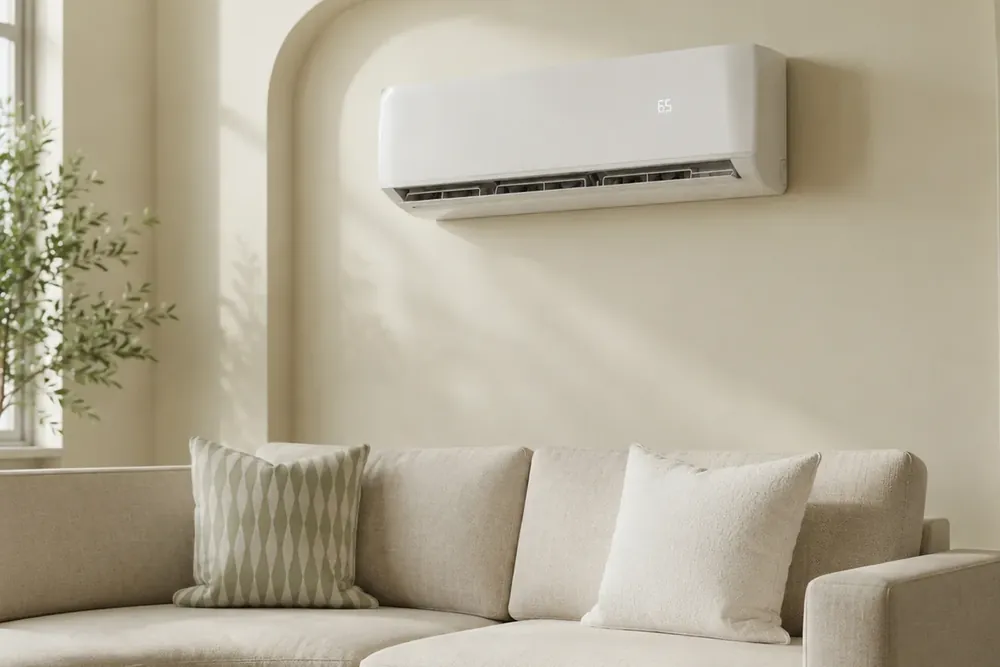
Best Mini Split Options
Best Mini Split Options for Mobile Homes
Mobile homes often lack space for traditional ductwork, and the ducts they do have-typically run under the floor belly-leak conditioned air badly. A ductless mini split bypasses that problem entirely. Mini-split systems operate without traditional ductwork, making them a near-perfect upgrade for single-wide and double-wide manufactured homes. Ductless systems are designed to fit smaller spaces without requiring ductwork, and since mini-splits can provide both cooling and heating, they're versatile for seasonal use across most U.S. climates.
Here are the quick winners for 2026:
-
Best all-around (single-wide, 700–1,000 sq ft): 12k–18k BTU inverter single-zone, ~19–20 SEER2
-
Best double-wide setup: 24k–30k BTU multi-zone, 2–3 indoor heads
-
Best cold-climate heat pump: Low-ambient inverter unit rated down to −13°F or lower
-
Best budget pick: 9k–12k BTU value unit on 115V power
-
Best DIY-friendly kit: Pre-charged quick-connect system with clear manuals
The "best" unit really has to do with getting the BTU sizing right for your specific mobile home, which means looking at age, insulation and climate zone, not just going for the highest SEER2 or a popular brand. These recommendations are based on Manual J-style load thinking and typical manufactured-home floor plans.
Section 02
How We Chose the Best Mini Splits for Mobile Homes
Mobile homes experience temperature variations more than site-built houses due to thinner walls, less insulation and more window area relative to square footage. That means sizing, cold-weather performance and installation limits all carry extra weight.
Performance and Sizing Fit for Mobile Homes
Mini-split systems usually have high efficiency ratings measured by SEER2 for cooling and HSPF2 for heating. High SEER2 efficiency ratings can save on cooling and heating costs over time. Mini-split units usually range from 1.5 to 4 tons, and AC units for mobile homes generally fall in that same range. Proper sizing of mini-splits should look at things like insulation and windows, not just square footage. For each zone, the DOE recommends that you calculate Manual J loads, because each indoor head is sized to its own room and the outdoor unit to the total. Rules of thumb like "20 BTU per sq ft" are only a starting point. A mobile home's age, ceiling height and window area can swing the real number 30–40%. Improving insulation reduces the work the AC unit has to do, and properly sealed windows and doors prevent air leaks that push the load up even more.
Cold-Climate and Shoulder-Season Heating Capability
Many readers will use a mini split as their primary heat source. ENERGY STAR's 2026 cold-climate spec requires heat pumps to keep at least 70% of rated heating capacity at 5°F. Mini-split systems can cool spaces down to −25°C, and the best cold-climate models still deliver heat at those temperatures. PNNL says that in most of the U.S., sizing a heat pump right for cooling leaves it too small for heating, especially in cooler regions, so this guide goes with models that have strong low-temp capacity.
Noise, Comfort and Humidity in Small Spaces
Mobile home walls are usually thinner than traditional homes, so quiet operation matters more. Known for its whisper-quiet operation, the Fujitsu Halcyon is a good example. The Pioneer Inverter+ operates at just 23 dBA, which is quieter than a fridge. Inverter-driven compressors in mini-splits adjust speed as needed to cut energy use and give you more even temperatures. In a DOE lab house test, a right-sized single-speed SEER 13 heat pump used 9.8–10.5% less cooling energy than an oversized one. But the opposite held for variable-speed: an oversized 3-ton variable-capacity unit used 11.7% less cooling energy than a right-sized 2-ton because inverters run most efficient at low speed. In that same leaky 10.2 ACH50 home, the oversized single-speed system held the lowest indoor humidity at 49% average, while variable-capacity units ran 52–55% on average.
Efficiency, Electrical Load and Operating Cost
Electrical capacity is critical for mini-split installations in mobile homes. Many older units have 100A panels. The Cooper & Hunter Olivia Hyper Series has a SEER2 of 26.4, which is among the highest available. The SEERXtreme FP10895US-WH+ has a 24 SEER2 rating, and the GreyVolt FP10902US-HS+ delivers a 22 SEER2 rating. That range of efficiency can mean real money saved on monthly bills in warm states.
Installation Practicality and Mobile-Home Constraints
Mobile home walls are thinner and need careful installation of units, so penetrations through siding must avoid structural framing. Mini-splits install easily without a lot of changes to existing structures, but they do need proper condensate drainage to prevent moisture problems. Installation should ensure outdoor condensers are mounted on stable platforms to prevent vibration. Outdoor units do need a flat, stable surface. Professional installation ensures proper handling of refrigerant lines, especially on longer runs. For homes where the outdoor unit sits along the tongue or rear wall, a 25-ft line set usually reaches. Equipment should ideally be HUD-listed for manufactured homes to avoid code or insurance issues.
Reliability, Warranty and Support
Look for at least a 5-year compressor and parts warranty. Mobile-home-listed models sometimes carry shorter warranty periods of 1–2 years, so check the fine print. Brands with reliable U.S. parts networks matter for full-time residents.
Best Mini Splits
Best Mini Splits for Mobile Homes in 2026
Below are five categories. Each one is tied to a specific mobile home use case, with realistic BTU ranges and climate notes.
1. Best All-Around for a Single-Wide (700–1,000 sq ft)
For a reasonably insulated single-wide in a moderate climate, a 12,000–18,000 BTU single-zone inverter mini split AC is the strong all-around choice. Target specs are SEER2 around 18–20, HSPF2 around 9–10, quiet indoor unit under 35 dB, with smart control via Wi-Fi as an option. Ideal for spaces under 600 sq ft, the DELLA Vario 12,000 BTU works well for smaller single-wides. One well-placed indoor unit in the main living space can handle 70–80% of the load with bedroom doors open.
Best for: 14×70 or 16×80 single-wides where winter design temps stay above 10–15°F. Key points: Right-sized capacity, inverter compressor for humidity control, common 25-ft line-set length. Limitation: A single indoor head leaves closed bedrooms warmer in summer and cooler in winter. It has a hard time below 10°F without backup heat.
2. Best for a Double-Wide (1,200–1,600 sq ft)
A 24,000–30,000 BTU multi-zone system with 2–3 indoor and outdoor units is the typical best fit. Mini-splits give you zoning flexibility for temperature control in mobile homes, and separate heads for the living area and bedroom wing cut down on temperature changes. Size the outdoor unit to the combined Manual J load. Don't make it too big "just in case," or you'll pay an efficiency cost.
Best for: 28×60 or 28×72 double-wides as the main HVAC system. Key points: Tailored BTU per zone, better comfort in closed bedrooms, energy savings in empty rooms. Limitation: Higher upfront cost and more complex refrigerant lines and condensate lines.
3. Best Cold-Climate Heat Pump
Cold-climate models maintain most rated heating capacity at 5°F and operate down to around −13°F or lower. Mitsubishi's MSZ-FS12NA Hyper-Heat keeps about 119% of its 47°F rating at 5°F. Panasonic's XE12 keeps 100%. Gree Sapphire ~98%. These can replace propane furnaces for many heating hours if they're sized to winter design loads.
Best for: Full-time residents in climate zones 5–7 with winter design temps below 10°F. Key points: Heating to −13°F, high HSPF2, advanced defrost and heaters for reliable performance in snow and ice. Limitation: May be oversized for cooling unless the inverter runs very low.
4. Best Budget for a Small Mobile Home
A 9,000–12,000 BTU budget single-zone unit suits 400–700 sq ft older single-wides or seasonal park models. The Airtural FP10899US-WH+ is designed for spaces up to 450 sq ft, which makes it a solid affordable option. 115V systems are common in smaller mobile homes to match existing electrical setups, so panel upgrades are often unnecessary. This is a major comfort and noise upgrade compared with window units. It won't break the budget.
Best for: Warm-state seasonal homes, vacation units or a single room in a larger home. Key points: Low wall space demand, simple setup, runs on existing 115V circuits, sleep mode and timers for convenience. Limitation: Small SEER2 and HSPF2 mean higher long-term energy costs. It has limited cold-weather heating.
5. Best DIY-Friendly Mini Split
DIY-friendly means pre-charged refrigerant lines, quick-connect fittings and no need to pull a vacuum with specialized tools. These kits connect quickly and come with detailed manuals. Even so, local code may require a licensed electrician for the disconnect and panel work.
Best for: Handy homeowners of smaller mobile homes in rural areas where HVAC labor is expensive. Key strengths: Dramatically lower installation cost, phone and online tech support, 9k–18k BTU sizes that align with smaller mobile home loads. Smart features like app-based controls are often included. Limitation: Warranty terms may be stricter for self-installations, and limited line-set length reduces custom layout options.
Comparison
Quick Comparison of the Best Mini Splits for Mobile Homes
-
Best single-wide all-around: 12k–18k BTU inverter single-zone - 700–1,000 sq ft, moderate climates
-
Best double-wide setup: 24k–30k BTU 2–3 zone - 1,200–1,600 sq ft, even comfort front to back
-
Best cold-climate heat pump: Low-ambient inverter - northern mobile homes, primary heat
-
Best budget option: 9k–12k BTU value unit - 400–700 sq ft, seasonal or small homes
-
Best DIY-friendly choice: Pre-charged quick-connect - handy owners cutting labor cost
How To
How to Choose a Mini Split for Your Mobile Home
Picking the right system comes down to three things you need to decide. You need to think about load sizing, layout and zoning and climate fit.
Choose Based on Correct BTU Sizing
Basic "BTU per square foot" rules lead you wrong when your mobile home has poor insulation, large end-wall windows or high solar gain. Input your ZIP code, room dimensions, insulation level, window area and which way the windows face into a Manual J-based calculator for an accurate number. Making the unit too small leads to long run times and hot rooms, while making the unit too big causes short cycling and poor humidity removal in single-speed systems, though variable-speed units can sometimes run most efficiently when they're a bit oversized.
Choose Based on Layout and Zones
Typical floor plans put the living room and kitchen at one end and bedrooms down a hall. If the plan is open and you keep doors open, a single head in the living area often handles it. When bedrooms are closed at night or the hallway is long, a second head on the bedroom end is worth the cost. DOE guidance says to calculate a load for each zone and match each indoor head to its room.
Choose Based on Climate and Heating Needs
In a Florida or Texas home that is cooling-dominated, you can size for cooling load with small heating needs. A Michigan or Maine home that is heating-dominated may need to make the unit bigger for winter or keep backup heat. PNNL's point is clear: sizing for cooling usually leaves heating too small, and sizing for heating makes cooling too big, especially in colder regions. When you plan to remove the furnace completely, it's worth paying for a professional Manual J and heat pump design.
Section 06
Which Mini Split Is Best for Your Mobile Home?
There is no single perfect unit for every mobile home. The right choice depends on your home's size, your climate, your specific needs for heating versus cooling, and whether the system will serve as primary or backup HVAC.
-
Choose a 12k–18k BTU single-zone inverter for a 700–1,000 sq ft single-wide in a moderate climate with existing backup heat.
-
Choose a 24k–30k BTU 2–3 zone system for a 1,200–1,600 sq ft double-wide that needs comfortable, even temperatures.
-
Choose a cold-climate heat pump if you live in a northern state and want your mini split to carry most of the winter heating load.
-
Choose a budget or DIY-friendly unit for a small or seasonal mobile home where low upfront cost matters most.
Run your numbers through a Manual J-style calculator before buying. If your results land on the edge between sizes, consult a pro, especially for older or leaky homes.
Bottom Line
Final Thoughts
With a well-chosen mini split, you can transform a mobile home from a place you endure into a comfortable, efficient, affordable living space year-round. Getting the load calculation and zoning right matters more than the appliances and brands. Furniture placement, mount location and security of the outdoor unit on a stable surface all deserve attention during setup.
Don't forget that measuring, figuring and planning ahead saves more money and hassle than going after a "top 10" list without considering your specific home. Start with the numbers, pick a reliable and efficient system that fits, and you'll be ready for peace of mind in every season, whether you're in a studio apartment-sized park model, a single-wide in Georgia or a double-wide in Minnesota. Even you as an owner of a condo or apartment follow the same sizing logic. The team that wins is the one that did the math first.