Section 01
Best Dual Zone Mini Split
If you need independent temperature control in two areas of your home-say a living room and a primary bedroom-from a single outdoor unit, a dual zone mini split is the most practical way to get there. A two-zone mini split connects one outdoor unit to two indoor units through a shared refrigerant circuit, and each indoor unit can independently control its temperature. That means you can cool a sun-baked living room to 72°F while keeping a bedroom at 68°F for sleeping, without wasting energy on spaces nobody is using.
This guide is for you if you're a US homeowner or a buyer who likes DIY and you're comparing systems before you talk to an installer or order equipment online. We organized our picks by looking at capacity ranges, how well they do in cold weather, energy use, controls, warranty and how well they work in real rooms and real climates-not by how popular the brand is.
Before you scroll to the picks, there's one thing to keep in mind: sizing does matter. You'll need the right BTU size so that a dual-zone system doesn't short-cycle and run poorly. Use a tool that is based on Manual J (like our mini split sizing calculator) or get a professional load calculation before you choose any system. The "best" dual zone mini split is the one that actually fits your house.
Section 02
How We Picked the Best Dual Zone Mini Splits
"Best" depends on your climate, room sizes, insulation quality, budget and whether the mini split system will serve as primary heat or just supplemental cooling. We screened current 2-zone outdoor units that are commonly available in the US market in fall 2026 across multiple brands, and we focused on 18,000–36,000 BTU/h models that actually match two typical zones.
Performance and Capacity
Most two-zone setups fall into two capacity ranges. For two average bedrooms or moderate living spaces, 18,000–24,000 BTU/h from the outdoor condenser is usually enough. For a larger open-plan area plus a bedroom, you're looking at 24,000–30,000+ BTU/h. Mini-splits range from 9,000 to 24,000 BTU per indoor air handler, and each indoor unit's size should match the room it serves.
Mini-splits connect indoor and outdoor units via refrigerant lines, and the outdoor compressor uses inverter technology for energy savings-ramping up and down instead of cycling on and off. If you oversize, it causes short cycling, poor humidity control and higher bills. Always look at AHRI-listed capacities, not just nameplate tonnage.
For colder DOE/IECC zones (5–7), we checked whether systems deliver at least 70% of rated heating down to 5°F outdoor temperature. Mini-splits can operate efficiently in temperatures down to 5°F, but the usable heat output varies a lot by model.
Efficiency and Operating Cost
We have focused on systems with SEER2 of 19 or higher and HSPF2 of 9 or above. Higher SEER2 ratings mean you use less electricity over the season. Mini-splits can achieve SEER ratings between 21 and 33.7, and the top-performing cold-climate models reach SEER2 values near 29 with HSPF2 above 12.
Mini-splits are more energy-efficient than central air systems in large part because they skip ductwork completely. Duct losses account for about 30% of central air's energy consumption, so a ductless mini split delivering the same BTU to a room uses a lot less electricity than a central AC system pushing conditioned air through leaky ducts.
Climate Suitability
DOE climate zones and heating degree days change what "best" means. In DOE's climate guide, "cold" means 5,400–9,000 heating degree days (IECC zones 5 and 6), "very cold" means 9,000–12,600 (zone 7), and "subarctic" is 12,600 or more (zone 8, found only in Alaska). DOE's county guide puts Miami-Dade in zone 1A, Houston (Harris) in 2A, Phoenix (Maricopa) in 2B, Dallas and Atlanta (Fulton) in 3A, and Las Vegas (Clark) and Los Angeles in 3B.
Cold-weather performance is important when you choose a dual-zone heating system for winter operation. Systems labeled "hyper heat" or "low-ambient" are designed for IECC zones 5–7 and parts of zone 8. Cold-climate heat pumps can operate efficiently down to −22°F, though capacity drops as temperature falls.
Controls, Noise and Usability
We favored systems with person zone control-separate remotes, independent setpoints and adjustable fan speeds per room. Wi-Fi or smart assistant compatibility lets you monitor and control temperature settings from anywhere, but a basic IR remote control paired with an aftermarket smart controller is still acceptable.
Top-tier units can operate as quietly as 30–32 dBA on low settings, with premium models reaching 19–24 dB(A) on their lowest fan speed. That matters for bedrooms and home offices. Outdoor unit noise matters too, especially on tight lot lines in dense neighborhoods.
Installation, Reliability and Warranty
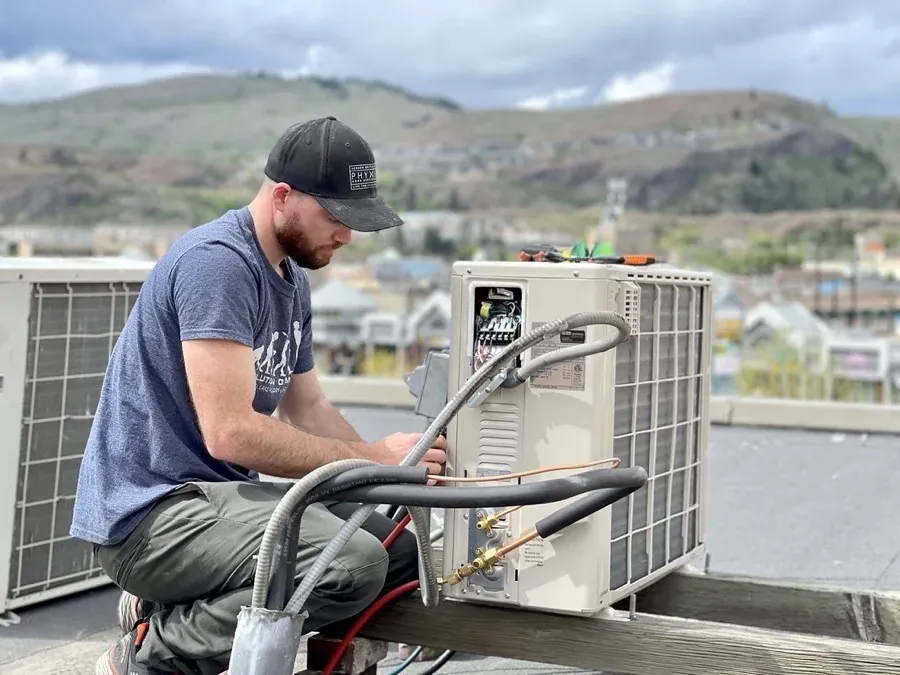
Most dual-zone systems need a licensed installer. A mini-split needs a dedicated electrical line for installation. The electrical wiring often calls for a 230V circuit. Seven mini-split models in the market need professional installation. Three mini-split models are designed for DIY installation with pre-charged linesets. Installation quality affects the heating and cooling performance of mini split systems a lot, so cutting corners on the install to save money usually costs more in the long run.
We prioritized long parts and compressor warranties-7 to 12 years when installed by a registered contractor. In smaller markets where one brand may dominate local inventory, a robust installer network and accessible spare parts matter to you.
Section 03
Best Dual Zone Mini Splits by Home and Climate
1. Best Overall Dual Zone Mini Split
A 24,000–27,000 BTU/h dual-zone heat pump that balances efficiency, cold-climate performance and good controls covers the widest range of US homes. Systems in this class usually offer SEER2 around 22–24, HSPF2 near 10 and heating rated down to −13°F. Many systems now use lower Global Warming Potential refrigerants like R454B or R32, showing the industry's move away from R-410A.
Why It Stands Out
This capacity hits the sweet spot for a two-story home or a ranch with an open living area plus a separate bedroom zone. Multiple indoor units can be mixed-for example, a 9k head in the bedroom and a 12k or 15k head in the living space-so each zone is right-sized to its Manual J load. The range that the compressor can modulate keeps it from short-cycling even at part load, and quiet indoor operation suits sleeping areas.
Best For
-
Two-story homes that need one zone for the main living area and one for a primary bedroom suite.
-
Homeowners in moderate to cool climates (IECC zones 3–5) who use the mini split as primary cooling and major supplemental heat.
Key Strengths
-
High efficiency brings your bills down compared with older single-stage central air conditioning.
-
Heating capacity is maintained down to at least 5°F outdoor temperature, which covers much of the northern US outside the coldest pockets.
-
Good mix of wall-mounted indoor unit sizes so each zone matches its load.
Possible Limitations
-
Premium efficiency and cold-climate rating carry the highest price in their class, so this is not the cheapest option.
-
Needs professional installation and may need a dedicated electrical circuit upgrade depending on existing panel capacity.
2. Best Dual Zone Mini Split for Cold Climates
For zones 6–7 and parts of zone 8, you need a hyper heat dual-zone system that is designed to deliver usable heating well below 0°F. These systems maintain high COP at 5°F and carry rated operation to −13°F or −22°F.
Why It Stands Out
Older mini-splits may struggle in freezing conditions, but modern cold-climate models with vapor-injection compressors and adaptive defrost strategies retain 80–100% of nameplate heating at 5°F. Advanced defrost reduces comfort swings and frost buildup on the outdoor coil. Base-pan heaters prevent re-freezing during shutdown.
Best For
-
Homes in northern New England, upper Midwest and mountain West where design temperatures reach 0°F or below.
-
You, if you want the dual zone mini split to be the primary heat source, not just a shoulder-season backup.
Key Strengths
-
High HSPF2 in cold climate testing plus documented capacity at 5°F and below.
-
May qualify for enhanced utility rebates and federal tax credits in northern states.
-
Strong warranty support where these systems are commonly installed.
Possible Limitations
-
Usually more expensive and sometimes slightly lower SEER2 than warm-climate models because the compressor is built for heating.
-
Greater oversizing risk if you choose capacity for worst-case heating without a proper Manual J. A person who skips the load calc often picks too many BTUs.
3. Best Budget-Friendly Dual Zone Mini Split
For mild to warm climates, a more affordable 18,000–24,000 BTU/h 2-zone system keeps installation costs and equipment cost manageable. Mini-splits usually cost between $3,000 and $5,000 to install, and budget-tier equipment sits at the lower end of that range. Installation costs for dual-zone systems range from $3,000 to $8,000 depending on complexity and region.
Why It Stands Out
Lower upfront cost while still offering inverter technology and reasonable efficiency. It's a good choice when you're replacing window air conditioner units in two different rooms or adding cooling to a small space like an ADU.
Best For
-
Homeowners in warmer climates (zones 1–3) where extreme winter heating is not a priority.
-
Rentals, guest suites or detached studios where initial cost matters more than top-tier specs.
Key Strengths
-
Solid SEER2 (17–19), sufficient for most southern markets without the price premium of ultra-high efficiency.
-
Simpler controls that can improve ease of use for a person who prefers simple equipment.
-
May run off slightly smaller electrical circuits, cutting down on panel upgrade costs.
Possible Limitations
-
Limited low-ambient heating ability-often not suitable as sole heat in IECC zones 5–7.
-
Shorter or more restrictive warranties and fewer indoor unit styling options.
4. Best DIY-Friendly Dual Zone Mini Split
Three mini-split models on the market are designed for DIY installation, using pre-charged refrigerant line sets with quick-connect fittings. Brands like Zone Air and MRCOOL ship complete kits with color-coded connections, communication cable and condensate tubing.
Why It Stands Out
DIY models remove the need for a vacuum pump or refrigerant license, appealing to capable homeowners. DIY installation involves electrical work and refrigerant line checks, so you still need comfort with 240-V circuits and local code. Installing a 2-zone mini-split usually takes 1 to 2 days whether you hire a pro or do it yourself.
Best For
-
Skilled DIYers who are comfortable working to code, pulling permits and handling electrical work.
-
Detached garages, shops or outbuildings where a slight performance compromise is acceptable in exchange for saving money on labor.
Key Strengths
-
Potentially lower total project cost if diy installation is done correctly.
-
Flexible line set lengths and routing options that suit unconventional layouts.
-
Warranty coverage valid under homeowner install (usually 5-year parts, 7-year compressor) on qualifying SKUs.
Possible Limitations
-
Warranty may be shorter or more limited than pro-installed lines from another company.
-
Higher risk of performance issues or leaks if any step is done incorrectly. You are still better off hiring an installer in many cases.
5. Best Compact Dual Zone Mini Split
An 18,000–20,000 BTU/h 2-zone system with dual 9,000 BTU indoor air handlers fits compact homes, townhomes and condos without oversizing. A 12,000 BTU unit covers 350 to 550 square feet, so dual 9k heads cover two modestly-sized rooms comfortably.
Why It Stands Out
Compact outdoor footprint and quiet operation make it ideal for a tight urban lot or balcony. Right-sized heads avoid the humidity and short-cycling problems that come from putting too many BTUs into one room.
Best For
-
Two-bedroom apartments where you want one zone for the living and kitchen area and one for the primary bedroom.
-
Smaller homes in climates like Los Angeles (3B) where loads are small but year-round comfort matters.
Key Strengths
-
Capacity range that matches small-space Manual J loads without the rest of a large condenser going to waste.
-
Very low indoor sound ratings on quiet mode, suitable for sleeping areas and home offices.
-
Moderate efficiency without the cost of high-capacity condensers.
Possible Limitations
-
Limited options for future expansion-may not support adding a third or fourth zone later.
-
Not suitable for large open-plan homes or spaces with lots of west-facing glass and high ceilings.
6. Best Dual Zone Mini Split for Large, Uneven Loads
A 30,000–36,000 BTU/h dual-zone system lets you pair a large open-plan living area with a smaller bedroom or office. Indoor heads might be 9k + 24k, serving dramatically different rooms from one outdoor unit.
Why It Stands Out
Wide range of indoor head sizes lets you put one big zone and one small zone on the same outdoor condenser. A good turn-down ratio prevents constant short cycling in the smaller room even when the larger zone runs at full capacity.
Best For
-
Homes with a big, open kitchen-living-dining area plus a bedroom that needs independent control at different temperatures.
-
Sun-heavy rooms with lots of south or west glazing where loads differ dramatically between zones.
Key Strengths
-
High maximum capacity to handle open-plan areas in hot counties like Clark (Las Vegas) or Maricopa (Phoenix).
-
Stronger air throw from the larger indoor unit, useful in vaulted or high-ceiling spaces.
-
Often compatible with multiple indoor unit types (wall, slim duct, ceiling cassette) for layout flexibility.
Possible Limitations
-
Greater risk of oversizing if you underestimate the benefit of envelope upgrades. When siding comes off, ENERGY STAR says to blow insulation into empty wall cavities and add R-5 insulated sheathing in zone 3 or R-5 to R-10 in zones 4–8. Better insulation cuts the needed capacity.
-
Higher breaker size and wire gauge requirements that can trigger electrical panel upgrades.
Comparison
Quick Comparison of the Best Dual Zone Mini Splits
| System Type | Best For | Typical Capacity | Key Priority |
|---|---|---|---|
| Best Overall | Typical single-family homes in moderate climates | 24,000–27,000 BTU/h | Year-round comfort in two main zones |
| Best Cold-Climate | Northern states (zones 5–7), winter as primary heat | 24,000–30,000 BTU/h | Reliable heating well below freezing |
| Best Budget | Warm-climate homeowners replacing window units | 18,000–24,000 BTU/h | Low upfront cost |
| Best DIY-Friendly | Experienced DIYers handling pre-charged linesets | 18,000–27,000 BTU/h | Lower installed cost, self-reliance |
| Best Compact | Small homes, condos, townhomes | 18,000–20,000 BTU/h | Right-sized for modest room sizes |
| Best High-Capacity | Large open-plan + smaller zone | 30,000–36,000 BTU/h | Handling uneven, large loads |
How To
How to Choose a Dual Zone Mini Split
Choose Based on Heating and Cooling Load
Square footage, ceiling height, insulation levels and window quality all affect BTU/h needs for each zone. Sizing must consider room features like sunlight exposure, high ceilings and the number of occupants. The 2021 IECC added R-5 continuous insulation to the R-20 wood-frame wall in climate zones 4 and 5, and deepened slab-edge insulation from 2 ft to 4 ft-these code changes lower heating loads in newer homes.
ENERGY STAR windows (since October 2023) must be U-0.22 or lower in the Northern zone, U-0.25 and SHGC 0.40 or lower in North-Central, and U-0.28/0.32 with SHGC 0.23 or lower in the South-Central and Southern zones. Better windows mean smaller loads.
Typical capacity combinations: a 9k + 12k pair on a 24k condenser works for most moderate homes. Avoid pairing two large heads on a small condenser-the outdoor unit becomes the bottleneck, and neither zone runs well.
Choose Based on Climate Zone
Connect your DOE/IECC climate zone to the right system type. If you're in Miami-Dade (1A), prioritize SEER2 and humidity control-an energy efficient standard heat pump handles winters easily. If you're in Minneapolis (zone 6), you must prioritize low-temp heating performance and look for a specific model with documented capacity at 5°F.
Even with a cold-climate mini split, backup heat (electric baseboards, a gas furnace) may still be needed on the coldest nights. At −22°F, a hyper heat unit rated to that temperature may produce only 30–60% of its nameplate output. Capacity at 5°F is the better comparison point.
Choose Based on Layout and Future Plans
Line set length limits, routing through walls and elevation changes between floors affect which outdoor location and system type you choose. Pre-charged linesets from DIY brands have strict maximum lengths-exceeding them can void your warranty.
Choose Based on Budget and Operating Cost
Stepping up to higher SEER2 and HSPF2 makes economic sense when local electricity rates exceed $0.15/kWh and you run the system year-round. In mild climates with low usage, the payback on premium efficiency can stretch beyond 10 years.
Section 06
Which Dual Zone Mini Split Is Best for You?
Here's a quick decision model matched to reader types:
- Choose the DIY-friendly dual zone system only if you're highly confident handling 240-V work and following local code. Otherwise, you'll want to prefer pro-installed options with longer warranties.
Bottom Line
Final Thoughts
The best dual zone mini split is the one correctly sized to your rooms, matched to your climate zone, and installed properly. No single brand or specific model wins everywhere. A system that's perfect for a condo in Los Angeles would be a poor fit for an entire house in Vermont, and vice versa.
Rules of thumb like "500–600 square feet per ton" are only a loose starting point. By accounting for insulation, windows, orientation and infiltration, a Manual J–style load calc gives you the real answer. Improving your envelope-air sealing, adding insulation, upgrading to ENERGY STAR windows-can shrink the needed BTU/h and sometimes let you choose a smaller, cheaper and more efficient dual-zone system.