Settling the MRCOOL vs Pioneer mini split question, and picking the best DIY mini split heat pump in 2026, comes down to how much work you want to do, how cold your winters get, and how much you want to spend over the life of the unit. This guide breaks down the top contenders so you can make a confident decision this year.
Quick Answer: Best DIY Mini Split Heat Pump in 2026
For most homeowners in 2026, a true pre-charged DIY system is the right call because you don't need a vacuum pump and you don't handle refrigerant. With the MRCOOL DIY 5th Gen being the best-known of these, MRCOOL says "no special tools or training are necessary to install" it. Zone Air is the other true DIY system that's worth a close look, since it has a pre-charged line set cut to the exact length you measure and 24 SEER2 on its 230V units. If you're comfortable with traditional refrigerant handling, Pioneer would be the leading budget conventional alternative to look at.
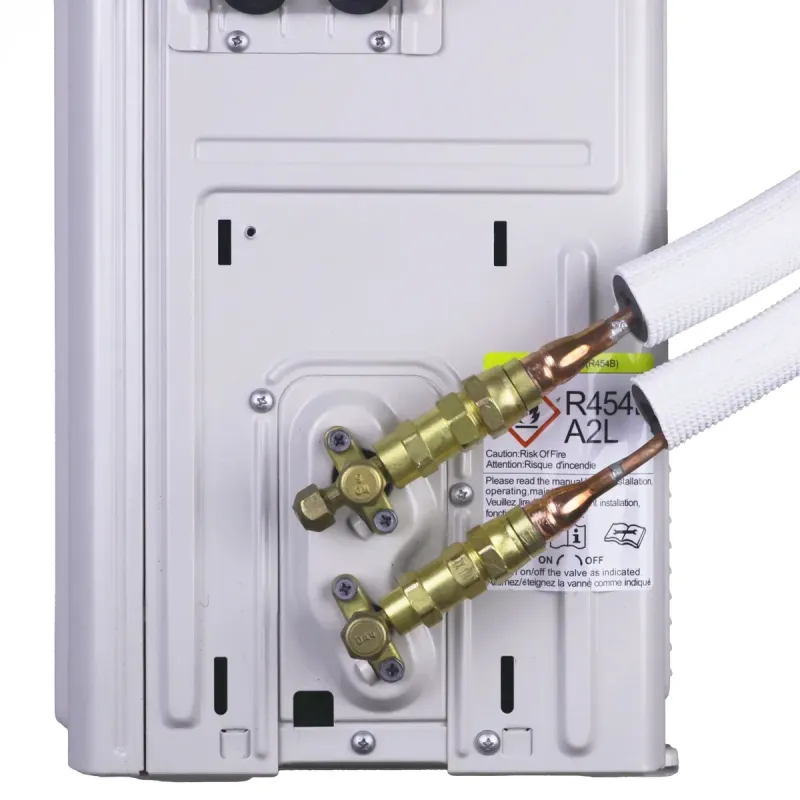
Here's the quick comparison:
| MRCOOL DIY 5th Gen | Zone Air | Pioneer Diamante | Mitsubishi (pro-install) | |
|---|---|---|---|---|
| Install difficulty | Easy DIY installation | Easy DIY installation | Moderate (flaring, vacuum) | Professional installation required |
| Equipment cost (12k) | about $2,359 (115V, Home Depot, September 2026) | $1,999.99 (115V) / $2,199.99 (230V) | Under $1,000 for an 18k (equipment only) | $3,500–$5,500 with install |
| SEER2 range (single-zone) | 22.5–23.6 | 23 (115V), 24 (230V), 23 (18k) | 17–25 (typically 19–21) | Premium models exceed both DIY brands |
| Cold-climate floor | about −13°F (Hyper Heat: −22°F) | −13°F | −4°F (Diamante); Quantum lines lower | Best extreme-cold performance |
| Line set | 11.5–50 ft fixed lengths, couplers to 75 ft | Any whole foot from 5 to 75 ft | Field-flared copper | Contractor-run |
Final verdict in brief:
- Since it has the biggest DIY catalog, a 5-year parts warranty and a 7-year compressor warranty, and installation that's easy for a DIYer, the MRCOOL DIY 5th Gen wins
- Zone Air is the pick when you want the line set cut to length, the highest single-zone efficiency in the true DIY class (24 SEER2 at 230V), or wall, cassette and concealed ducted units on one outdoor unit
- For colder climates where winter lows drop below 10°F, the pick is MRCOOL Hyper Heat
- Pioneer fits budget-focused buyers who own or will rent specialized tools
- When you factor in the cost of labor and the rental of equipment, pre-charged DIY systems can often end up cheaper overall
How We Ranked the Best DIY Mini Splits for 2026
These ratings are weighing what a homeowner actually deals with on install day, not just what's on the spec sheets.
Evaluation factors:
- Total cost of ownership (equipment + realistic DIY or contractor labor)
- Install path: true DIY versus DIY-adjacent versus pro-install
- Efficiency ratings are SEER2 for cooling and HSPF2 for heat
- Hyper heat performance in cold climates
- Warranty strength under homeowner installation
- Refrigerant future-proofing (R-454B vs R-410A phase-down)
What counts as what:
- True DIY mini splits have a pre-charged line set, so you don't need a vacuum pump and you don't have to handle refrigerant. Both MRCOOL DIY and Zone Air are in this group.
- DIY-adjacent: homeowner-mountable but still needs flaring, vacuum and often a certified technician for refrigerant work. Pioneer, Senville fall here.
- Pro-install: fully contractor-handled. Mitsubishi, Daikin.
This article focuses on the single-zone class that runs from 9k to 18k BTU, but these conclusions apply to multi zone systems as well.
MRCOOL DIY 5th Gen Is the Best-Known True DIY System in 2026
Most homeowners hear about the MRCOOL DIY 5th Gen first when they start looking into DIY mini split heat pumps.
Here are the single-zone sizes available in 2026, from the MRCOOL catalog:
- 9,000 BTU (115V) - up to ~400 sq ft
- 12,000 BTU (115V) - up to ~550 sq ft
- 18,000 BTU (208/230V) - up to ~800 sq ft
- 24,000 BTU (208/230V) - up to ~1,050 sq ft
The 5th Gen DIY line uses pre-charged Quick Connect line set technology with R-454B refrigerant. No vacuum pump, no flaring. Installation is designed for homeowners without advanced HVAC skills, and most homeowners can finish it in a weekend.
Key 5th Gen upgrades vs 4th Gen:
- R-454B eco-friendlier refrigerant replacing R-410A
- The indoor unit runs quieter (the 12k wall head is rated at 18 dB(A))
- You get smart controls through the MRCOOL app (Wi-Fi via a plug-in dongle) and it works with Alexa and Google Assistant
- It has improved low-ambient heating: the 12k has about 31% more capacity at 5°F than the 4th Gen did, based on ENERGY STAR data.
The MRCOOL DIY 5th Gen is ENERGY STAR certified, which can mean lower operating costs and potential rebate eligibility.
The MRCOOL DIY 5th Gen carries a 5-year parts and 7-year compressor warranty with no registration required, and it holds under homeowner installs done per the instructions.
Zone Air Has Custom Line Sets and 24 SEER2 on 230V
Zone Air is the other true pre-charged DIY system in this comparison. You buy it direct at zone-air.com and they have live technical support from 8 AM to 6 PM MT. It covers the same install path as MRCOOL DIY. There is no vacuum pump, no gauges and no refrigerant handling. But there are a few differences that start to matter once you're planning the install.
- Line sets cut to length. Of the brands compared here, Zone Air is the only one that cuts your pre-charged line set to the exact length you measure, any whole foot from 5 to 75 (as of November 2026). MRCOOL sends fixed 11.5, 16, 25, 35 and 50 ft sets plus couplers and has you coil the excess behind the condenser. Zone Air's longer sets are a single factory-sealed run up to 75 ft with no field joint.
- 24 SEER2 on 230V. At 24 SEER2 on its 230V 9k and 12k units, Zone Air is the highest-efficiency pre-charged quick-connect DIY system of the brands compared here (MRCOOL's best single-zone is 23.6). At 115V the order changes: Zone Air's 115V units are 23 SEER2, and MRCOOL's are 23.5–23.6.
- Mixing indoor unit styles on one outdoor unit. Zone Air is the only DIY mini split that lets you mix wall-mount, ceiling cassette and concealed ducted units on one outdoor unit (as of November 2026). You get one outdoor unit, the right indoor unit for every room, and you can install it yourself.
- Cold and hot weather. It's rated to heat at −13°F. That is the same floor as MRCOOL's standard DIY 5th Gen (MRCOOL's higher-tier DIY models are rated lower). It can cool in outdoor temperatures up to 131°F (MRCOOL publishes 122°F).
- Warranty and returns. You get 5-year parts and 7-year compressor coverage with no registration deadline, and installing it yourself does not void it. There are also 30-day returns on uninstalled units and free shipping to the lower 48.
- 115V plug-in option. With a dedicated 15A outlet and the optional cord kit, Zone Air's 12k 115V model ($1,999.99, November 2026) can plug in where local electrical code allows a plug-in install (never an extension cord), while MRCOOL's 115V units are hardwired.
Zone Air does final assembly, testing, and inspection in the USA. Its single-zone wall systems top out at 18,000 BTU, so for a 24k single room you'll need MRCOOL since Zone Air doesn't make that size.
MRCOOL DIY Hyper Heat for Single-Digit Winters
MRCOOL DIY Hyper Heat is the cold-climate version of the 5th Gen DIY mini split. It was engineered for harsh winters, the kind where standard units lose capacity. If your climate zone regularly sees temperatures below 10°F, this is the right solution. MRCOOL Hyper Heat models operate from −22°F to 122°F, so you get comfort all year in both hot and cold weather.
Available Hyper Heat sizes:
- 12,000 BTU (208/230V) - bedrooms, bonus rooms, small apartments (~550 sq ft)
- 18,000 BTU (208/230V) - larger living areas, garages, additions (~800 sq ft)
How Hyper Heat is different from the standard 5th Gen DIY:
| Hyper Heat 12k | Hyper Heat 18k | Standard 5th Gen 18k | |
|---|---|---|---|
| SEER2 | 23.5 | 21.2 | 22.5 |
| HSPF2-4 | 10.0 | 11.0 | 11.5 |
| Heating floor | −22°F | −22°F | about −13°F |
The price premium is typically several hundred dollars, but you avoid the cost of backup or auxiliary heat. The standard 5th Gen line is rated to operate down to about −13°F, with full capacity to around 5°F and output tapering below that. For anything colder, Hyper Heat is the answer.
MRCOOL DIY vs Pioneer as the Best DIY-Friendly Budget Choice
This is the comparison most of you are thinking about: MRCOOL DIY for true DIY with no vacuum pump versus Pioneer for a budget-friendly conventional mini split that still brings in confident DIYers.
Price dynamics in 2026:
The MRCOOL DIY 12,000 BTU 115V kit was about $2,359 at Home Depot in September 2026. Pioneer 18K BTU units retail under $1,000 for equipment only, so Pioneer systems often feature competitive initial purchase prices compared to MRCOOL DIY. But that sticker gap shrinks fast once you add the tools and labor Pioneer requires.
Pioneer units typically require traditional vacuuming and flaring for installation. You'll need a vacuum pump, gauge manifold, flaring tools and either EPA 608 certification or a contractor for the refrigerant step, so Pioneer installation usually necessitates professional assistance, especially for refrigerant work. Pioneer units may require optional Wi-Fi modules for smart features, while MRCOOL DIY mini splits work with the MRCOOL app through their Wi-Fi dongle.
Efficiency comparison:
MRCOOL DIY 5th Gen single-zone units get SEER2 ratings of 22.5 to 23.6, and the 18k multi-zone condenser hits 23.9 SEER2. Pioneer units are usually in the 19 to 21 SEER2 range, though they go from 17 to 25 SEER2 depending on which model you look at.
Cold-climate limits:
Pioneer's Diamante units are rated to heat down to −4°F, and its Quantum lines go to −13°F or lower. MRCOOL Hyper Heat models operate down to −22°F. For reference, Mitsubishi systems outperform MRCOOL in extreme cold climates with their premium hyper-heating technology, but Mitsubishi installations typically add $3,500 to $5,500 in total project cost. Mitsubishi's premium models exceed MRCOOL's efficiency ratings, and Mitsubishi offers a longer warranty of 10 to 12 years, but at a price point that puts them outside the DIY market entirely.
Pioneer's warranty is 1 year on parts unless you register the unit within one week of installation, which extends it to 5 years on parts and compressor.
Bottom line: Pioneer fits tool-comfortable, budget-focused buyers in mild climates. MRCOOL DIY fits homeowners wanting a simple, warranty-safe DIY system they can install themselves.
True DIY vs Traditional Mini Split Install Key Differences
It helps to understand the key differences between a true DIY system and a conventional mini split install so you can figure out which path matches your skills and budget.
Here's what "true DIY" means for systems like MRCOOL DIY and Zone Air:
- Pre-charged line set with Quick Connect fittings - no refrigerant handling
- No nitrogen pressure test or vacuum required
- Socket-and-wrench-friendly instructions
- Installation can be completed in a few hours by homeowners
- Because the refrigerant stays sealed in the line set that the factory already charged, you don't have to get certified for any refrigerant step
What you need for a traditional install (Pioneer, Senville, most brands):
- Brazing the line set or flaring it properly with specialized tools
- Pulling a deep vacuum (measured in microns)
- Leak checking and adding refrigerant by weight
- Traditional systems require specialized training and tools for installation
- EPA 608 certification or hiring licensed technicians
With the cost impact too, renting a vacuum pump and gauge set runs $150–$300, and once you add flaring tools, nitrogen and possible contractor labor for the refrigerant step, a "cheap" Pioneer kit can end up near MRCOOL DIY pricing. You might need permitting and electrical work like a dedicated circuit either way.
It's a good idea to check with your local building department before you buy, including whether your municipality needs a licensed installer even on DIY mini splits.
Inside a DIY Mini Split with Condenser, Air Handler and Line Set
Understanding what's in the box helps you know exactly what you are buying.
Outdoor unit (condenser): this is where you'll find the inverter-driven compressor, fan and heat exchanger. Inverter technology is what lets the compressor adjust speed continuously rather than cycling on and off. That improves efficiency, reduces sound and keeps the temperature in your room more stable.
Indoor air handler: this is the wall-mounted head that sends out conditioned air. In 2026, MRCOOL models have Follow Me temperature sensing and app control that works with Alexa and Google Assistant.
Line set: in a MRCOOL DIY system, this is the pre-charged copper line set that has patented Quick Connect valves. With a 75 ft maximum in mind, MRCOOL sells 11.5, 16, 25, 35 and 50 ft lengths, and there are couplers to join two sets up to that maximum. Zone Air has 16, 25, 33, 50 and 75 ft sets or a custom cut to any whole foot from 5 to 75. If you go past the max length limits, that can void performance guarantees, so it is a good idea to plan your placement before you drill.
Communication cable: this is what connects the air handler to the condenser for control signals. Zone Air includes it with every unit, while traditional kits often need you to buy it separately along with other fittings.
MRCOOL Advantage Series and Easy Pro vs DIY 5th Gen
MRCOOL's catalog has several lines beyond the DIY 5th Gen. They are built for different kinds of buyers.
The Advantage Series is a heat pump line that is meant for contractors to install. It is rated up to 21.5 SEER2. MRCOOL says it is "meant to be installed by a qualified HVAC technician". This is the right pick if you have no interest in DIY or if local code demands a pro install.
Easy Pro is a basic single-zone DIY mini split that comes with a 16 ft pre-charged line set. It has strong cooling efficiency on the 9k–12k models (19.5–20.2 SEER2), so it is a good solution for small spaces in mild climates when you need to keep costs down.
The price math works out like this: Advantage Series equipment cost plus $800–$1,500 in pro install labor often ends up near a DIY kit's delivered price, but you get contractors handling the work and insulation of connections.
When to choose what:
- Advantage Series: you have no interest in DIY, or local code demands a pro install
- Easy Pro: small room, mild climate, tight budget
- 5th Gen DIY: the single-zone Hyper Heat option for cold rooms, support for multiple zones, the full 5/7 warranty, and whole-home projects
4th Gen vs 5th Gen DIY Systems on Refrigerant, Efficiency and Future-Proofing
Both 4th Gen and 5th Gen MRCOOL DIY units may still be on the market in 2026, with 4th Gen models being closed out and often marked down.
Refrigerant change: the 4th Gen uses R-410A. It is being phased down under federal rules. The DIY 5th Gen uses R-454B (A2L, lower GWP), and this is the long-term standard. You can expect R-410A servicing costs to go up as supply gets short.
Performance differences: the 5th Gen models generally do a little better than the 4th Gen when it comes to SEER2, how much capacity they have in cold weather, and smart control features. At 5°F, the 12k 5th Gen delivers about 8,400 BTU/h versus ~6,400 BTU/h from the 4th Gen - about 31% more heating capacity when you need it most.
Buyer guidance: a discounted 4th Gen can be a smart investment if you expect to move or remodel within ~7 years and the savings are significant. If that doesn't apply to you, the 5th Gen DIY is the safer long-haul pick.
Energy Star, Hyper Heat and Operating Costs
Efficiency labels turn directly into monthly bills, so here's how to read them. Energy Star certification for mini split heat pumps in 2026 means the unit has to meet strict cooling and heating efficiency cutoffs. The MRCOOL DIY 5th Gen has the label.
What the numbers mean:
- SEER2 (cooling): higher = less electricity per BTU of cooling. The MRCOOL DIY 5th Gen falls in the low-20s, and Zone Air's 230V 9k and 12k units are 24.
- HSPF2 (heating): higher is cheaper winter heat. The 18k MRCOOL system has an HSPF2-4 of 11.5 versus 9.5 on Pioneer's Diamante Pro 12K. That is about 20% more efficient heating, and that drives real savings over a long winter.
Hyper heat models trade a bit of nominal SEER2 for robust low-ambient heating, but that trade-off is still far cheaper than running resistance heat or an aging furnace in cold regions.
To size a unit for your room and climate before comparing operating costs, the free mini split sizing calculator on this site works for any brand.
What Homeowners Actually Do on a Weekend for DIY Installation
Here is what a realistic pre-charged DIY install looks like, so you can judge whether you are comfortable doing it.
High-level steps:
- Plan where you will put the indoor unit and the outdoor unit, including wall space, electrical access and drainage
- Put the indoor air handler on the wall bracket
- You'll need to drill the 3–3.5″ hole through the wall for the line set
- Put the outdoor unit on a pad or on brackets
- Run the pre-charged line set to the units and connect it with Quick Connect fittings
- Run the communication cable between units
- You'll need to wire the dedicated circuit (115V for MRCOOL's 9k and 12k, 208/230V for 18k and up) and power it up
Tools needed: drill with hole saw, level, stud finder, wrenches, torque wrench. No vacuum pump, no gauges, no brazing equipment.
Safety and code: most jurisdictions require a dedicated electrical circuit. You may need an electrician for that step and a permit depending on local rules. Beyond the electrical work, the rest is straightforward for most homeowners.
Compare that to a non-DIY system like Pioneer or Senville, which adds refrigerant handling, flaring or brazing, deep vacuum pulling and potential contractor scheduling - turning a weekend project into a multi-day affair.
Final Verdict: Which DIY Mini Split Should You Buy in 2026?
- This year, most homeowners looking for a top DIY mini split heat pump should look at the MRCOOL DIY 5th Gen. It has easy installation, a 5/7 warranty with no registration, efficient performance and R-454B future-proofing, so it is a strong system for single-zone projects and multi zone projects alike.
- Zone Air is the pick if you want a line set cut to the exact length, 24 SEER2 on 230V or wall, cassette and concealed ducted units on one outdoor unit, with the same −13°F floor and 5/7 warranty.
- If you live in a colder climate where winter lows drop below 10°F, the MRCOOL DIY Hyper Heat is the clear pick. It operates down to −22°F without backup heat.
- Pioneer and other budget brands are strong options only if you are comfortable with tools and willing to manage the evacuation of a traditional line set, or pay contractors for that part of the job.
- The Advantage Series fills the niche for homeowners who want MRCOOL quality with a professional install, while Easy Pro covers budget cooling in mild climates.
The DIY mini split market in 2026 rewards buyers who match the right system to their climate, space and comfort level with tools.
Next step: measure your room, check your winter low and run the numbers through the sizing calculator before you order, so you get the right system the first time.
Related guides
- Best DIY mini split heat pump for heating and cooling
- Top DIY mini split heat pumps ranked for 2026
- Best DIY mini split heat pump for cold climates
- Mini split operating temperature ranges by brand
- Best quick connect mini split
- What is SEER2?
Specs and warranty terms are manufacturer-published as of November 2026, subject to change; verify before purchase. MRCOOL® is a trademark of its owner; this article is not affiliated with or endorsed by MRCOOL.