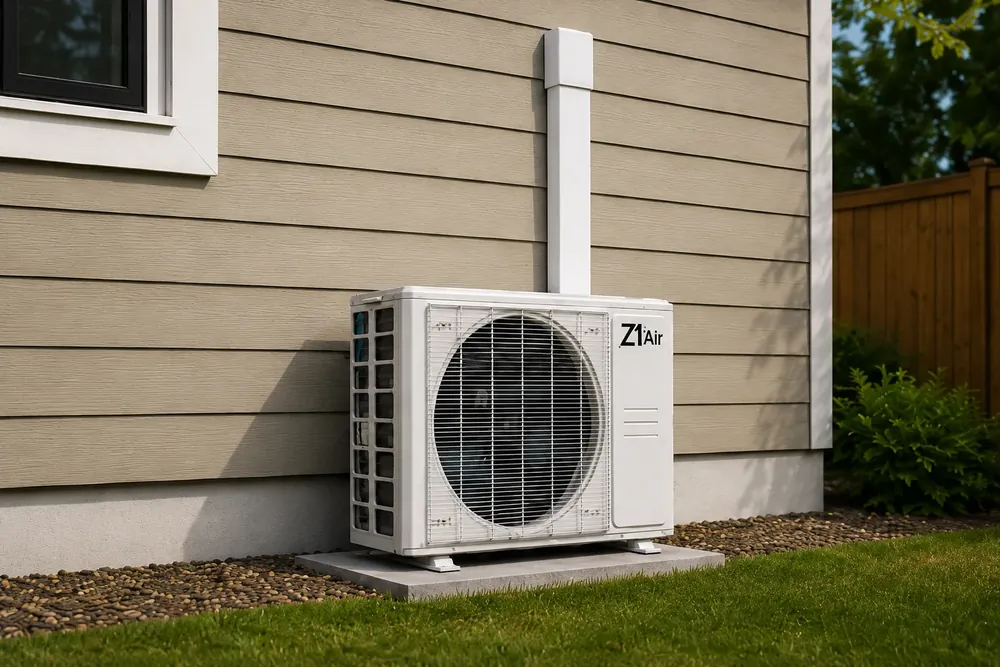
Best Mini Split
Best Mini Split for a Sunroom
For most U.S. sunrooms, a high-SEER2, cold-climate ductless mini split in the 12,000–24,000 BTU/h range is the right starting point. But glass area, orientation, and your local climate can push that number significantly up or down.
Sunrooms can be harder to keep comfortable than the rest of your house. Standard rooms have walls with insulation that rates R-13 to R-21. On a good day, a glass wall might get to R-2. That means sunrooms usually need more BTUs per square foot than standard rooms, often 30 to 50+ BTUs per square foot due to solar heat gain, compared with the 20 BTU per square foot starting point used for conventional spaces. Going past the standard estimates by 30% to 50% is normal. When you size a mini split for a sunroom, you usually have to go past the standard estimates because of all that glass.
This guide is about single-zone ductless mini split systems that are sized for a sunroom, not for the whole home. Ductless mini-splits don't need ductwork to install, and they give you both heating and cooling for year-round comfort. We'll explain how we picked the top options, walk through the best units for different sunroom situations, and show you how to size and choose the right one. You can use a free Manual J-based tool like minisplitsizingcalculator.com to estimate the cooling and heating load for your specific sunroom by ZIP code and room details.
Section 02
How We Picked the Best Mini Splits for Sunrooms
There are loads of ductless brands in the U.S. market, but only a group performs well in glass-heavy sunrooms across different climates. The list below was cut down to five distinct option types based on real sunroom fit, not brand hype.
Performance in Real Sunroom Conditions
Sunrooms can have higher indoor air temperatures and solar gains than any other room in the house. Mini-split systems for sunrooms need to handle high glass-to-surface ratios and rapid temperature shifts. A cloud passing overhead can swing the load a lot.
Performance was looked at ASHRAE 2021 design temperatures, not mild days. Those reference points vary widely: Chicago O'Hare is at 88.5°F for cooling and 3.3°F for heating (99%), while Denver International hits 92.3°F cooling and 5.8°F heating. Seattle-Tacoma only gets to 82.2°F for cooling and 30.0°F for heating, and Los Angeles International is at 81.3°F cooling and 47.0°F heating. Models that keep strong capacity at both ends of this spectrum got higher marks.
Ductless mini-split systems can run efficiently in temperatures over 100°F, which matters in sun-baked spaces where the air conditioning system faces sustained peak loads.
Efficiency, Humidity Control and Noise
Because sunrooms often run for long hours, SEER2 and HSPF2 ratings matter. Ductless mini-splits can achieve SEER ratings of 20 to 23, and moving from 14 SEER2 to 17 alone can reduce cooling energy use by 18%. Mini-splits also avoid duct losses, improving energy efficiency by about 30% compared to ducted systems. Higher SEER ratings lead to lower energy bills over time, which is important when your sunroom's outdoor compressor runs daily through summer.
Glass-heavy sunrooms are prone to high humidity and window condensation. Humidity management is especially important for sunrooms in humid climates to avoid excess moisture on every surface. A dedicated dry mode in air conditioning systems helps extract that excess moisture. Models with strong dehumidification performance did well, especially for climates like Boston Logan (87.7°F / 71.6°F wet-bulb) and New York LaGuardia (89.8°F / 72.5°F wet-bulb).
Ductless mini-splits operate quietly compared to window AC units, which is critical since sunrooms are usually relaxing spaces. Mini-split systems for sunrooms should ideally be quieter due to their use as fun rooms. Indoor unit noise levels under 30 dB were preferred; some models reach as low as 23 dB, which is very quiet.
Cold-Climate and Shoulder-Season Heating Capability
Many readers want their sunroom usable on chilly spring and fall days, not just in summer. Cold-climate heat pump technology is needed for reliable winter heating in sunrooms where design temps get near or drop below 0°F. ASHRAE's 2021 Minneapolis-St. Paul heating design is −6.0°F at 99% and −10.6°F at 99.6%, while Chicago hits −1.7°F at 99.6%.
Air conditioning units with low-ambient heating capabilities keep the sunroom running during freezing temperatures. Models that keep most of their rated capacity at 5°F or lower are a better fit for four-season sunrooms in northern states, and ductless mini-splits can run efficiently in temperatures as low as −13°F. Some hyper-heat units keep over 100% of their 47°F capacity at −13°F, while budget models drop to 50%.
Installation Flexibility and Sunroom-Friendly Form Factors
Many sunrooms have limited wall space, high ceilings and large window walls, which makes indoor unit placement tricky. Units with wall-mounted, floor-mounted and ceiling cassette options were preferred. DIY-friendly aspects are noted where relevant, but professional installation is recommended for refrigerant and electrical work, especially in complex setups. Installing a mini split in a sunroom with tall glass walls and skylights usually calls for a licensed HVAC professional.
Reliability, Support and Overall Value
The list prefers brands with a strong U.S. parts network, long compressor warranties and proven track records. Value here is about the best cost-to-comfort ratio over 10–15+ years, not the cheapest upfront price. The article is brand-neutral and groups models into practical "best for" categories rather than pushing a single manufacturer. Utility incentive plans are also tightening qualification standards, so look for models that qualify for tax credits and rebates based on SEER2, HSPF2 and low-ambient COP cutoffs.
Best Mini Splits
Best Mini Splits for Sunrooms by Setup
Instead of a single "winner," this section groups top units into clear scenarios. Each one starts with a properly calculated load using a Manual J-based tool or HVAC professional, then matches that load with the right system.
1. Best Inverter Mini Split for Medium Sunrooms
A 12,000–18,000 BTU/h high-SEER2 inverter heat pump from a major brand balances price, efficiency and comfort for a 200–350 square foot sunroom with reasonable insulation. A 12,000 BTU mini-split covers 250–300 sq ft, while an 18,000 BTU unit covers 350–400 sq ft in standard conditions, but sunrooms need about 20 to 40% more BTUs than standard rooms so you'll want to plan accordingly based on your square footage and increase BTU by 10% to 40% for glass walls.
Why It Stands Out: This class offers 18–22 SEER2 cooling and strong HSPF2, making it energy efficient for glass-heavy sunrooms that run daily. Advanced inverter technology lets you get more efficient temperature control and energy savings because inverter compressors continuously adjust their speed to match the thermal load. High-efficiency inverter models can help manage operating costs during extended runtime. Using high-efficiency models with strong SEER2 ratings is crucial to combat outdoor elements in sunrooms.
Best For: Homeowners with a 3-season or moderately insulated 4-season sunroom in climates like the Northeast corridor (Boston Logan at 12.8°F heating, New York LaGuardia at 17.9°F) and Midwest (Chicago O'Hare at 3.3°F) where both cooling and shoulder-season heating matter. Zoned comfort for a single room connected to the house but thermally separate.
Key Strengths: High SEER2 for lower power bills. Good dehumidification for muggy climates. Variable-speed compressor reduces short cycling when solar gain changes quickly between clouds and full sun, delivering cool air consistently.
Possible Limitations: May be undersized for larger spaces or rooms with extreme solar gain and little shading. Not the cheapest option compared with entry-level portable units or window units.
2. Cold-Climate Mini Split for Four-Season Sunrooms
A hyper-heat style 15,000–24,000 BTU/h heat pump maintains capacity near 0°F, turning a sunroom into a four-season living space in cold regions. These ductless heat pumps can handle both heating and cooling through the worst winter months.
Why It Stands Out: It maintains a high percentage of rated heating capacity at 5°F and below, which matches design temps in cities like Minneapolis-St. Paul (−6°F) and Chicago (−1.7°F at 99.6%). It often includes advanced frost-control and base-pan heaters.
Best For: Sunrooms in northern tier states used every month for year-round comfort. Glass-heavy spaces where you want the mini split as the primary heat source rather than backup.
Key Strengths: Strong low-ambient heating down to −5°F to −13°F. Good enough cooling efficiency (15–20 SEER2) for summer. Detailed capacity tables make Manual J matching easier.
Possible Limitations: Higher upfront cost. Overkill for mild climates like the Pacific Coast where design lows stay above freezing.
3. Budget Mini Split for Small or Seasonal Sunrooms
An entry-level 9,000–12,000 BTU/h ductless mini split with mid-teens SEER2 is for homeowners who use the sunroom mostly late spring through early fall.
Why It Stands Out: Lower cost while still delivering better comfort and high efficiency compared to a window AC or portable AC. Simpler feature set focused on basic cooling and moderate heating. These replace noisy portable ACs and window AC units with something far quieter and more capable.
Best For: Small sunrooms (150–220 sq ft) in moderate or warm climates. If you're upgrading from portable units and don't need full winter use. Weekend or seasonal sunroom use where money saved upfront matters most.
Key Strengths: Affordable price point. Solid cooling to common peak temperatures. Simpler control if you're not a technical user. Even ceiling fans paired with these units improve air distribution in a hot space.
Possible Limitations: Lower SEER2 and HSPF2 mean higher bills if used heavily year round. Heating capacity falls off quickly below 20–25°F, limiting winter use in cold regions.
4. High-Capacity Mini Split for Large Glass Sunrooms
A 24,000–30,000+ BTU/h single-zone system handles big sunrooms (350–500+ sq ft) with extensive south- or west-facing glass and tall ceilings. A 24,000 BTU mini-split is ideal for 500–550 sq ft in standard conditions, but remember sunrooms can need 30 to 50+ BTUs per square foot so actual coverage depends on your glass area.
Why It Stands Out: Enough capacity for intense solar gains. Supports multiple indoor head form factors to deal with limited wall space.
Best For: Large sunrooms and "Florida rooms" with heavy afternoon sun in hotter cities like Denver at 92.3°F, and much of the Southeast. What about rooms with high ceilings that trap heat near the ceiling?
Key Strengths: High maximum BTU/h matched to calculated loads. Variable-speed operation turns down capacity on cloudy evenings. Higher indoor airflow breaks up hot spots near glass.
Possible Limitations: Higher cost and electrical requirements, and it may need a dedicated 240V circuit. Risk of oversizing if you guess by square foot instead of running an actual load calculation. Two units may be needed if the room exceeds 550 sq ft with heavy glass.
5. DIY-Friendly Mini Split for Accessible Sunrooms
A popular DIY-oriented ductless mini split line with pre-charged line sets and step-by-step guides. It's designed for handy homeowners whose sunroom lets you do simple wall penetration and outdoor unit placement.
Why It Stands Out: Pre-charged refrigerant line sets reduce complexity. It can appeal to homeowners comfortable with mounting, routing lines and coordinating a licensed electrician for the final connection. The ventilation and control setup is designed with instructions for you.
Best For: Ground-level sunrooms with easy access to an exterior wall. DIY-minded owners in mild to moderate climates. Saves money on labor costs.
Key Strengths: Reasonable efficiency for regular use. Included mounting hardware and support resources. No vacuum pump or gauges needed for quick-connect models.
Possible Limitations: Limited line-set length and routing flexibility. Improper installation can compromise efficiency or void warranties. For complex layouts, tall walls or code requirements, hiring a licensed HVAC professional is worth it.
Comparison
Quick Comparison of the Best Mini Split Types for Sunrooms
| Type | BTU Range | Best Sunroom Size | Climate Fit | Install |
|---|---|---|---|---|
| High-efficiency inverter | 12k–18k | 200–350 sq ft | Typical U.S. | Pro |
| Cold-climate heat pump | 15k–24k | 200–400 sq ft | Northern U.S. (below 0°F) | Pro |
| Budget system | 9k–12k | 150–220 sq ft | Mild/warm | Pro or DIY |
| High-capacity system | 24k–30k+ | 350–550 sq ft | Hot summers, large glass | Pro |
| DIY-oriented mini split | 9k–18k | 150–350 sq ft | Mild to moderate | DIY + electrician |
How To
How to Choose the Right Mini Split for Your Sunroom
Choosing the "best" unit is mostly about matching capacity and features to your sunroom's load, climate and usage pattern. How do you pick the right tonnage? You'll want to run at least a quick load estimate with a Manual J-based calculator first.
Choose Based on Climate and Design Temperatures
Hotter design temps (89.8°F at New York LaGuardia, 92.3°F at Denver) push cooling loads up for glass-heavy rooms. Colder winter design temps (−6°F at Minneapolis, 3.3°F at Chicago, 12.8°F at Boston) demand better low-ambient heating performance if you use the sunroom in winter. Pick models with capacity tables that show British thermal units of output at your approximate design temperature.
Choose Based on Sunroom Construction and Glass
Consider square footage, ceiling height, glass type (single, double, low-E), and whether walls have any insulation. South- and west-facing glass, skylights and dark interior finishes increase solar gain and needed BTU/h. Solar shades can block up to 99% of UV rays and meaningfully reduce cooling load. Use a calculator to input exact window sizes, orientations and ceiling height instead of guessing by floor area alone. Mini-split systems for sunrooms should be oversized compared to traditional room sizing due to glass exposure.
Choose Based on How You Use the Sunroom
Heavy, year-round use justifies higher SEER2 and better dehumidification-they pay back through lower utility bills. Occasional summer-only use in a mild climate like Seattle or coastal California may justify a simpler, lower-cost unit. The humidity in a space with that much glass and moisture matters. Regular maintenance keeps the system handling it well.
Choose Based on Power and Installation Path
Check your panel capacity and breaker space. Larger AC units may need new 240V circuits. Place the indoor unit for clear airflow without blasting directly at seating areas. For complex layouts, tall glass walls, ducts running through the house to reach the sunroom, or code requirements, hire an HVAC professional. The outdoor unit needs enough clearance and shouldn't direct noise toward windows or seating.
Section 06
Which Mini Split Type Is Best for Your Sunroom?
Quick Recommendations by Scenario
-
Medium sunroom, typical climate: Choose a high-efficiency 12k–18k inverter system for the best balance of comfort, efficiency and cost.
-
Northern U.S., four-season use: Choose a cold-climate 15k–24k heat pump so the sunroom functions as a year-round room through winter.
-
Small, lightly used sunroom: Choose a budget 9k–12k system if you mainly need relief from summer heat.
-
Large, all-glass sunroom: Choose a 24k–30k+ high-capacity unit if the space bakes in afternoon sun, especially in hotter design-temp regions.
-
Simple layout, handy homeowner: Choose a DIY-oriented mini split and coordinate a licensed electrician for the final connection.
Bottom Line
Final Thoughts
The best mini split for a sunroom is the one correctly sized to the room's actual load and matched to your local climate and how you plan to use the space. Rules of thumb by square footage alone are risky for sunrooms because of all the glass and solar gain, so a Manual J-style calculation is worth the few minutes it takes.
Run your sunroom through minisplitsizingcalculator.com with your ZIP code, glass details and ceiling height. Use the result to choose the most appropriate category from this guide. Getting the sizing right once gives you a decade or more of quiet comfort with no constant adjusting, no short cycling and no hot-and-cold swings in the one room in your house that's supposed to be the most enjoyable.